A home decoration table is much more than a practical surface for everyday use. Whether it sits in your living room, hallway, or dining area, the way you style a table has a powerful influence on how the entire room feels. A thoughtfully decorated table introduces personality, balance, and warmth without requiring a complete room makeover or an expensive shopping trip.
Many homeowners look at a coffee table, console table, or side table and feel something is missing. Sometimes the surface appears empty and lifeless. Other times it becomes overcrowded with everyday items that create visual chaos. The secret lies in finding the perfect balance between beauty and functionality. A well-styled table should look inviting while still remaining useful for daily life.
This comprehensive guide explores practical techniques used by experienced interior designers to create beautiful table displays. From styling a welcoming coffee table to designing an elegant console table and maintaining an attractive dining table, every idea focuses on creating spaces that feel comfortable, organized, and timeless.
If you’re also refreshing your seating areas, explore these ideas for Home Decoration Item Chair 25 Stylish Chair Ideas to create a cohesive interior throughout your home.
Why Every Home Decoration Table Matters
Every visible table acts as a visual anchor inside a room. Rather than treating these surfaces as places to simply collect everyday objects, consider them opportunities to tell a story about your home’s personality.
A carefully styled table helps:
- Create an inviting atmosphere.
- Add texture and visual depth.
- Reflect seasonal changes with minimal effort.
- Introduce color without repainting walls.
- Improve organization while reducing visible clutter.
- Draw attention toward attractive focal points.
Perhaps the best part is that table styling rarely requires expensive designer furniture. Rearranging books, candles, greenery, bowls, trays, and decorative accessories often produces dramatic improvements using items you already own.
The Basic Design Principles Behind Every Beautiful Home Decoration Table
Professional interior designers rarely place decorative pieces randomly. Every arrangement follows a few simple visual principles that make a display feel balanced rather than accidental.
Create Layers Instead of Flat Arrangements
Flat surfaces become visually interesting when objects overlap slightly or are grouped together. Rather than spreading every item evenly across the table, combine pieces into small compositions that naturally guide the eye around the display.
Balance Beauty With Function
A beautifully decorated table should still serve its original purpose. Your coffee table needs room for drinks. An entry console should still hold keys or mail. A dining table should remain easy to clear before meals.The most successful designs never sacrifice convenience simply to display more decorative objects.
Use Groups Instead of Single Objects
Collections of carefully selected pieces usually feel more intentional than isolated decorations. A vase paired with books and a candle immediately creates greater visual interest than placing each item separately across the table.
The Coffee Table: The Living Room Anchor
Among every home decoration table, the coffee table usually becomes the center of attention. Positioned between seating areas, it naturally attracts the eye whenever someone enters the living room.
Its styling should strike a careful balance between elegance and everyday usability. Guests should still have enough room to place a cup of coffee, a remote control, or a favorite book without disturbing the arrangement.
Divide the Surface Using the Grid Strategy
One of the easiest professional styling methods is mentally dividing the tabletop into two or three invisible sections.Instead of decorating every inch equally, dedicate each section to a small composition. This creates natural breathing space while preventing clutter from spreading across the surface.Even round coffee tables benefit from this approach because it encourages intentional placement instead of random decorating.
Use an Anchor Tray to Organize Small Accessories
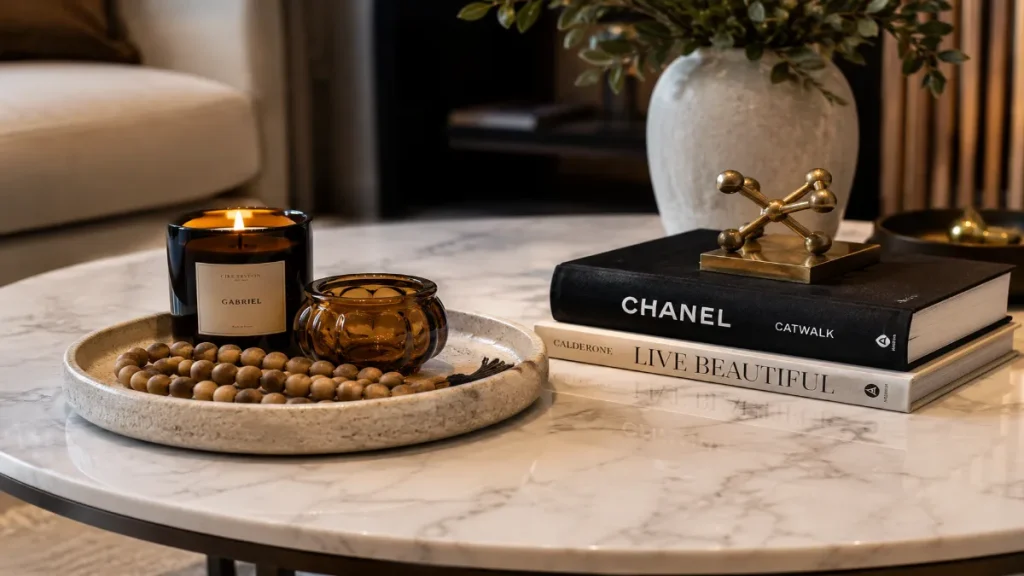
A decorative tray instantly creates structure. Whether round or rectangular, a tray groups smaller objects together into one organized display instead of making them appear scattered.Popular tray accessories include:
- Scented candles
- Decorative beads
- Small sculptures
- Crystal accents
- Coasters
- Mini plants
- Ceramic bowls
Besides improving appearance, trays make cleaning faster since several objects can be moved together.
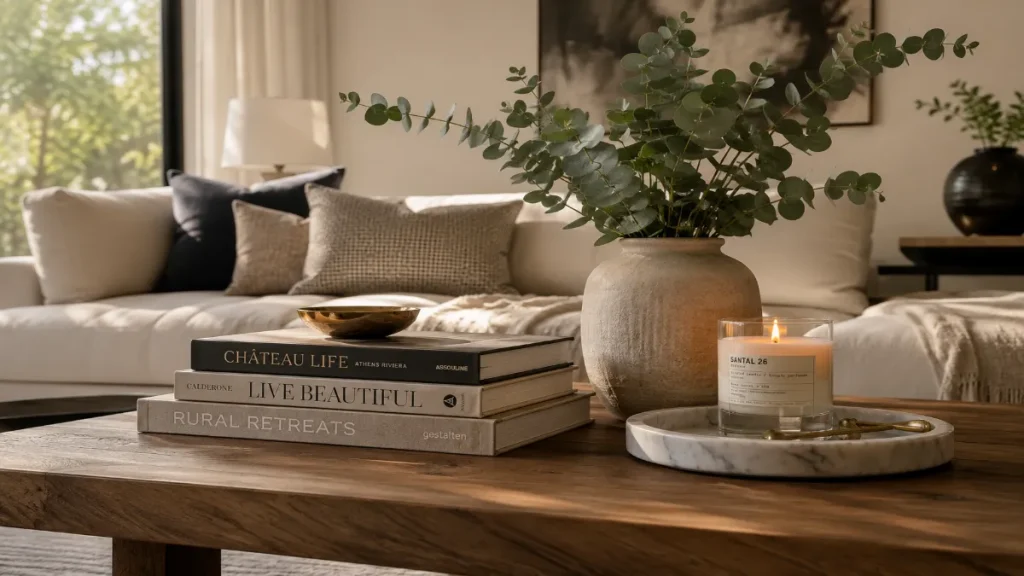
Stack Beautiful Hardcover Books
Books remain one of the most versatile styling tools available.Choose two or three oversized hardcover books covering subjects such as travel, architecture, photography, fashion, or art. Stack them neatly and finish the arrangement with one small decorative object placed on top. I often position the book spines inward rather than outward whenever the room follows a minimal aesthetic. It creates a cleaner appearance while allowing textures and shapes to take center stage instead of colorful book covers.
Add Height Variation
Tables decorated entirely with low objects tend to feel flat.Balance shorter accessories by introducing one taller feature that naturally draws the eye upward.Excellent options include:
- A ceramic vase filled with fresh eucalyptus
- Seasonal greenery
- A sculptural candle holder
- A tall pillar candle
- Fresh flowers
Mixing tall, medium, and low elements produces movement that keeps the arrangement visually engaging from every angle.
Keep Space for Everyday Living
One common decorating mistake is filling every available inch with accessories.Your coffee table should remain practical. Leave enough open surface for beverages, snacks, books, or board games without needing to remove decorative items every time someone visits. Empty space is not wasted space it allows every carefully chosen object to stand out more effectively.
The Console Table: Making a Memorable First Impression
The entryway introduces visitors to your home before they see anything else. Because of this, a console table deserves as much attention as any centerpiece inside the house. A well-designed console feels welcoming, organized, and effortlessly elegant while supporting everyday routines like dropping keys, bags, or mail.
Create a Strong Visual Backdrop
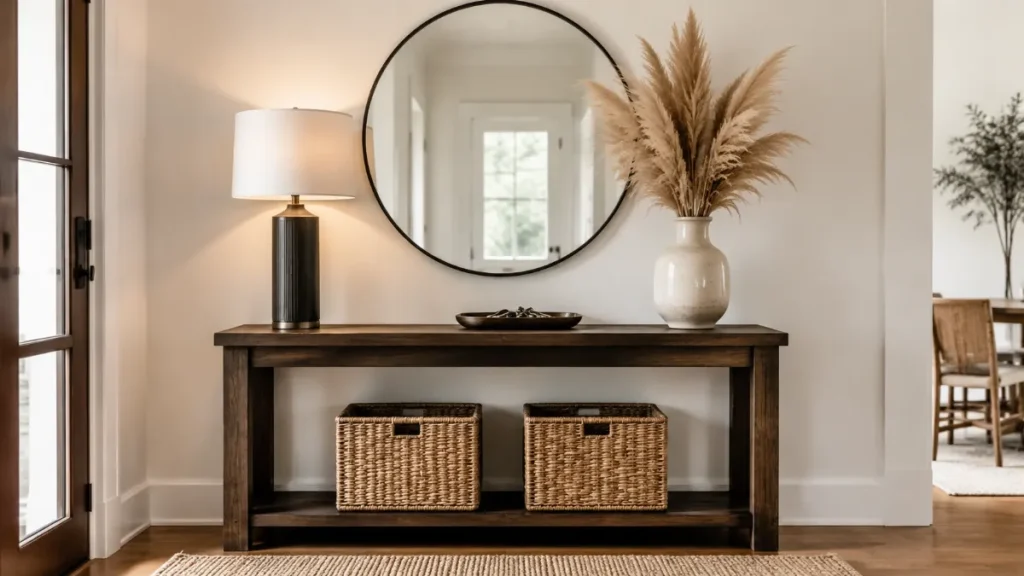
The wall above the console should never feel disconnected from the table itself. Adding one oversized statement mirror or a large framed artwork immediately creates vertical balance. The eye naturally travels upward, making both the furniture and the surrounding wall feel intentionally designed.Mirrors also reflect natural light, making narrow hallways appear brighter and more spacious.
Use Asymmetrical Styling
Perfect symmetry can sometimes feel stiff and predictable.Instead, create balance using different objects with similar visual weight.For example:
- Place a tall table lamp on one side.
- Style the opposite side with a vase and decorative bowl.
- Add a small stack of books beneath the vase.
- Include a tray for everyday essentials like keys.
This asymmetrical approach feels relaxed while maintaining harmony.
Decorate Below the Table Too
Many homeowners overlook the empty space beneath a console table.That lower area presents another opportunity to introduce texture while improving storage.Consider placing:
- Matching woven baskets
- Fabric storage bins
- Small upholstered stools
- Natural fiber baskets
These additions soften the furniture while keeping everyday items hidden from view.
Keep Functional Items Beautiful
Your console table often holds practical belongings.Instead of leaving loose keys, wallets, sunglasses, or mail scattered across the surface, organize them inside decorative bowls, trays, or lidded containers that complement the rest of the styling.Function and decoration should always work together rather than compete with each other.
For seasonal styling ideas that introduce natural color without constant maintenance, see Home Decoration with Artificial Flowers, which pairs beautifully with console tables throughout the year.
The Dining Table: Everyday Elegance That Feels Effortless
A dining home decoration table should never be reserved only for holidays or special celebrations. When thoughtfully styled, it becomes one of the most beautiful features of your home while remaining practical enough for daily meals.
The goal is to create a centerpiece that feels intentional without becoming inconvenient. A good dining table arrangement should be easy to remove or adjust whenever it’s time to eat, allowing the table to transition naturally from decorative display to functional dining space.
Start With the Power of a Table Runner
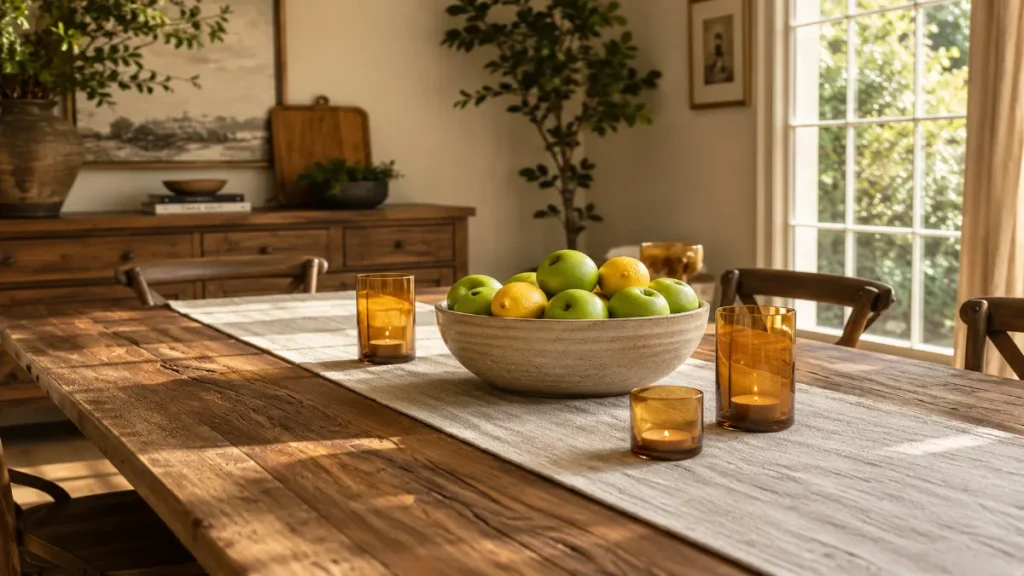
A table runner instantly softens large wooden, marble, or glass surfaces while creating a visual path through the center of the table.Natural fabrics such as linen or cotton provide warmth and texture without overwhelming the furniture.Neutral shades remain timeless, while seasonal colors can refresh the entire dining room throughout the year.
- Natural linen for Scandinavian interiors
- Soft cotton runners for casual family spaces
- Textured woven runners for rustic homes
- Dark neutral runners for modern interiors
Create a Living Centerpiece
Instead of using overly formal decorations that only appear during celebrations, choose a centerpiece that feels alive every day.A large ceramic bowl or clear glass vessel positioned at the center of the table provides an elegant foundation.Fill it with seasonal fruits such as:
- Green apples
- Fresh lemons
- Oranges
- Pears
- Decorative moss
- Small potted greenery
These natural elements introduce color while making the room feel fresh and welcoming.
Use the Rule of Three
Interior designers frequently rely on odd-numbered groupings because they naturally appear more relaxed and visually balanced.Three decorative objects of varying heights create movement without looking forced.Popular combinations include:
- Three ceramic vases
- Three amber glass bottles
- Three candle holders
- A vase, candle, and decorative bowl
The objects should differ slightly in height while sharing similar colors or materials to maintain harmony.
Keep Everyday Functionality in Mind
Your dining table still needs room for plates, serving dishes, and conversation.A centerpiece should never become so large that family members struggle to see one another across the table.Compact arrangements often create a stronger visual impact than oversized displays because they preserve openness throughout the room.
Golden Rules for Styling Any Home Decoration Table
No matter whether you’re decorating a coffee table, console table, dining table, or side table, these universal design principles consistently produce balanced, professional-looking results.
1. Vary Heights
Objects placed at exactly the same height create a flat and predictable appearance.Instead, combine tall, medium, and short accessories to encourage the eye to travel naturally throughout the arrangement.For example:
- A tall vase
- A medium candle
- A low decorative bowl
- A short stack of books
This combination introduces rhythm without making the arrangement feel busy.
2. Mix Different Textures
Texture adds depth even when your color palette remains simple.Rather than decorating with objects made entirely from one material, combine contrasting finishes.
- Smooth ceramic with woven baskets
- Natural wood beside polished glass
- Matte stone with metallic accents
- Linen fabric with marble accessories
- Rattan beside concrete planters
These subtle contrasts prevent the display from appearing one-dimensional.
3. Leave Negative Space
One of the most overlooked principles of interior styling is knowing when to stop decorating.Negative space allows every carefully selected object to breathe.When every inch of a table becomes covered, even beautiful decorations lose their impact. Empty space provides visual rest and makes the arrangement appear cleaner, calmer, and significantly more sophisticated.
Why Side Tables Deserve Just as Much Attention
Side tables are often treated as afterthoughts, yet they quietly complete the design of an entire living room.Whether positioned beside a sofa, between two armchairs, or standing alone in an empty corner, a well-styled side table improves both appearance and everyday convenience.Decorating these smaller tables is also one of the easiest ways to introduce personality without making permanent changes to a room.Useful decorative accessories include:
- Table lamps
- Scented candles
- Coffee table books
- Decorative trays
- Small baskets
- Fresh flowers
- Indoor plants
- Ceramic vases
- Natural wood accents
- Decorative bowls
Always remember to leave enough open space for practical items such as a coffee mug, television remote, mobile phone, or current reading book.
How to Decorate an End Table Without Creating Clutter
A beautiful end table balances style with function.The surface should feel decorated but never overcrowded.Choose accessories that introduce different materials, subtle colors, and varying finishes. Metallic accents brighten darker corners, greenery adds life, and neutral decorative objects create a calm contemporary atmosphere.
Decor should always complement the style of the surrounding room, whether your home leans toward farmhouse, traditional, transitional, Scandinavian, or modern interiors.
Natural seasonal decorations also make excellent choices. Branches, dried flowers, pine cones, and fresh greenery can easily be replaced throughout the year while keeping decorating costs low.
35 Inspiring Side Table Decorating Ideas
1. Accent With Colored Glass
Colored glass immediately catches natural light and introduces subtle color without overwhelming the room.Vintage bowls, decorative bottles, or artistic glass vases create elegant focal points while remaining practical enough to hold small accessories.
2. Decorate With Fresh Flowers
A simple vase filled with fresh flowers instantly brings life into any room.Tightly arranged roses, seasonal blooms, or garden flowers create an inviting atmosphere while adding softness to nearby furniture.
3. Group Objects in Threes
The classic rule of three works beautifully on side tables.Try combining a candle, decorative object, and book to produce a balanced composition that feels effortless instead of overly staged.
4. Stack Reading Material
Books serve both decorative and practical purposes.A neat stack of hardcover books creates height while making the table feel lived in. Finish the arrangement with an LED candle or a small vase of dried flowers for additional warmth.
5. Choose a Statement Lamp
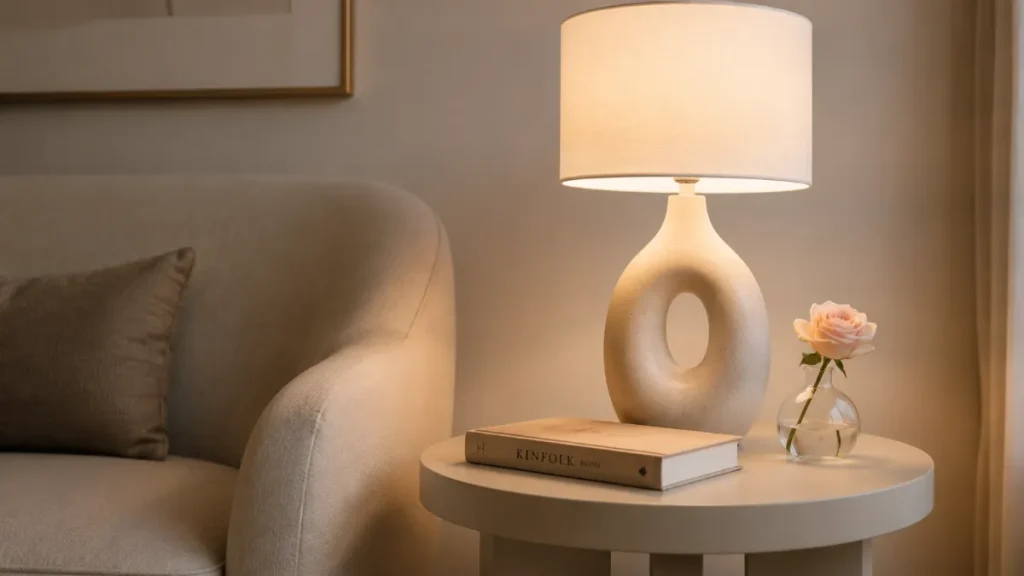
A sculptural table lamp can easily become the defining feature of an end table.Large bases, unique silhouettes, or textured materials draw attention upward while providing useful lighting for evening relaxation.
6. Display Seasonal Branches
Bring the outdoors inside by decorating your side table with seasonal branches. Spring blossoms, leafy summer stems, colorful autumn foliage, or evergreen winter branches instantly refresh a room without requiring major changes.A generous arrangement inside a tall ceramic or glass vase adds height while creating a natural focal point.
7. Corral Clutter With a Decorative Tray
Even beautifully designed accessories can appear messy when scattered across a tabletop. A decorative tray groups smaller items together and instantly creates a cleaner appearance.
Place items such as:
- Small candles
- Coasters
- Remote controls
- Decorative beads
- Mini planters
Metallic, wooden, marble, or woven trays all work well depending on the style of your room.
8. Keep Decorative Coasters Within Reach
Practical accessories can also become part of your décor.A stylish coaster set protects furniture while giving guests a convenient place to set down drinks. Stone, marble, cork, or handcrafted wooden coasters all contribute texture and visual interest.
9. Hide Everyday Clutter Inside a Basket
A woven basket placed on a lower shelf keeps small items neatly hidden while adding warmth and texture.
It’s the perfect place for:
- Television remotes
- Chargers
- Reading glasses
- Magazines
- Small blankets
This simple addition keeps your living room looking organized without sacrificing convenience.
10. Turn the Table Into a Plant Stand
If a side table sits in an unused corner, transform it into a dedicated plant display.A tall indoor plant introduces natural height while softening hard furniture lines. Palm varieties, fiddle leaf figs, peace lilies, or snake plants all create beautiful vertical accents.
11. Display an Open Book
Instead of stacking every book closed, leave one favorite volume open to a beautiful page.This creates a welcoming, lived-in atmosphere while encouraging guests to browse through travel photography, architecture, gardening, or art books.
Pair the display with a delicate vase of orchids or greenery for extra elegance.
12. Stick to Neutral Accessories
Neutral decorating never goes out of style.Small objects in shades of white, beige, gray, black, and soft earth tones create a calming atmosphere while allowing texture to become the star of the arrangement.
A simple combination of a candle, vase, decorative dish, and book often looks far more sophisticated than an overly colorful display.
13. Pair Black and White
Black-and-white combinations create timeless contrast.A matte black side table paired with a sculptural white ceramic vase immediately feels polished and modern without requiring additional accessories.
This high-contrast approach works particularly well in contemporary interiors.
14. Display a Chess Board
A beautiful chess set doubles as décor while encouraging conversation.
Vintage wooden boards, marble chess pieces, or modern minimalist sets provide both entertainment and visual interest.
Choose one attractive enough to remain on display even when not in use.
15. Leave Plenty of Empty Space
Not every side table needs to hold multiple decorative objects.
Leave enough open space for:
- A cup of coffee
- Your current novel
- A notebook
- A tablet
Sometimes a single decorative vase beside an empty area creates a stronger design statement than filling the entire surface.
16. Decorate With Vintage Books
Older hardcover books add warmth, character, and history.
Choose titles that genuinely reflect your interests instead of treating books as purely decorative objects. Their worn covers and textured pages naturally introduce personality into the room.
17. Mix Different Materials
One of the easiest ways to elevate a home decoration table is by combining contrasting materials.
For example:
- Wood with stone
- Glass with woven fiber
- Metal with ceramic
- Linen with marble
- Concrete with brass
These material combinations create depth that cannot be achieved through color alone.
18. Pair Mismatched End Tables
Your end tables don’t have to be identical to feel coordinated.
Tables of similar height and proportion with related finishes often look more collected and interesting than perfectly matching furniture.
You can unify mismatched tables by using matching table lamps or lampshades while varying the smaller decorative accessories placed beneath them.
Likewise, matching end tables don’t need identical decorations. Keeping the lamps consistent while changing books, plants, baskets, or decorative objects on each side creates a balanced design that feels natural rather than overly symmetrical.
19. Mix and Match Decorative Accessories
Matching end tables create structure within a seating arrangement, but the decorative objects placed on top should not necessarily mirror each other.
Use identical lamps to establish symmetry, then personalize each table with different accessories such as:
- A potted plant
- A stack of books
- A woven basket
- Decorative magazines
- A scented candle
- A ceramic bowl
This approach keeps the room balanced while preventing it from feeling overly formal.
20. Style a Standalone Side Table
A side table doesn’t always need to sit beside a sofa or chair.
Empty corners, wide hallways, or unused wall spaces become more inviting with a beautifully styled standalone table.
Add a vase of flowers, a few carefully selected books, and one sculptural object to transform an overlooked area into an intentional design feature.
21. Style With a Single Statement Object
Minimalist decorating proves that sometimes less truly is more.
A sculptural vase, handcrafted ceramic bowl, or artistic decorative object can become the entire focal point of a small side table.
Leaving the remaining surface empty emphasizes the beauty of that single piece while maintaining a clean, modern appearance.
22. Pair a Hardcover Book With Fresh Flowers
One hardcover book combined with a small vase of fresh flowers creates a timeless arrangement suitable for nearly every decorating style.
This simple pairing works especially well in reading corners, bedrooms, or beside comfortable lounge chairs where relaxation is the primary goal.
23. Create a Bold Focal Point
If your room uses mostly neutral colors, allow the side table itself to become the visual centerpiece.
A brightly painted table instantly draws attention.
Complete the arrangement with a contrasting decorative vase filled with tall branches that can easily be updated throughout the seasons.
24. Consider Scale Carefully
The size of every decorative object should match the size of the table.
Tiny tables can quickly become overcrowded if accessories are too large.
Instead, choose:
- A compact book
- A slim vase
- A small decorative bowl
- A modest candle
Leaving enough room for a mug of tea or coffee ensures the table remains practical as well as attractive.
25. Try an Organic Wooden Vase
Wood introduces warmth that many modern interiors need.
A handcrafted wooden vase creates beautiful texture whether displayed empty or filled with dried grasses, eucalyptus stems, or fresh flowers.
Its natural finish pairs particularly well with neutral furniture and earthy color palettes.
26. Decorate With Glass Table Lamps
Transparent glass lamps preserve an open, airy feeling, especially in smaller rooms.
Because light passes through the base, they appear visually lighter than solid ceramic or metal lamps while still providing practical task lighting.
Matching glass lamps on both sides of a floating sofa create elegant symmetry without overwhelming the room.
27. Use the Table as a Decorative Display
If a side table isn’t needed for everyday activities, treat it as a dedicated styling surface.
Layer decorative objects such as:
- Small indoor plants
- Art books
- Natural wood sculptures
- Ceramic bowls
- Textured decorative boxes
Keeping the coffee table relatively simple while allowing the side table to showcase decorative collections creates visual balance throughout the living room.
28. Add a Large Scented Candle
A quality scented candle functions as both decoration and mood lighting.
Even when unlit, an oversized candle introduces texture, shape, and elegance to a seating area.
Dark candle containers often create dramatic contrast against lighter furniture, while neutral containers blend seamlessly into minimalist interiors.
29. Create an Eclectic Collection
Eclectic styling celebrates personality.
Mix accessories with different heights, colors, finishes, and materials while maintaining enough visual balance to avoid clutter.
A combination of:
- A tall lamp
- A small indoor plant
- A scented candle
- A vintage vase
creates an interesting layered display that feels collected over time rather than purchased all at once.
30. Add a Colorful Table Lamp
A vibrant table lamp instantly becomes the focal point of a side table.
If the lamp feels slightly short, elevate it by placing it on top of two or three attractive hardcover books. This simple styling trick increases height while adding another decorative layer beneath the lamp.
31. Display Your Spirit Animal
Add a meaningful decorative sculpture that reflects your personality. Whether it is an elephant, bird, horse, owl, or abstract animal figure, a carefully chosen sculpture gives your side table a unique identity.
Position the sculpture on the upper surface while leaving the lower shelf available for functional items such as:
- Books
- Reading glasses
- Magazines
- Beverages
This creates an attractive balance between decorative appeal and everyday practicality.
32. Vary Heights and Colors
One of the easiest ways to make a home decoration table look professionally styled is by combining objects with different heights and complementary colors.
For example, pair:
- A tall white ceramic vase
- A medium-sized candle
- A colorful decorative object
- A small stack of magazines on the lower shelf
The eye naturally travels through the arrangement, making the entire display feel dynamic instead of flat.
33. Top an Extra-Tall Table With Greenery
Extra-tall side tables or decorative plinths naturally add drama to a living room.
Rather than overcrowding the surface, allow a single vase filled with leafy green stems to become the centerpiece.
This clean approach highlights the height of the furniture while maintaining a refined and uncluttered appearance.
34. Incorporate Metallic Accents
Metallic accessories help reflect light throughout a room while adding subtle luxury.
If your side table does not include a lamp, consider decorating with:
- Gold sculptures
- Brass bowls
- Silver candle holders
- Bronze decorative objects
Reflective finishes brighten darker corners and pair beautifully with natural materials such as wood, stone, and linen.
35. Leave One Table Completely Empty
If your living room contains several side tables, remember that every surface does not need decoration.
Keeping one table empty creates visual balance while providing a convenient location for drinks, snacks, laptops, or books whenever needed.
A nearby table decorated with a simple vase of flowers is often enough to maintain harmony throughout the seating area.
Professional Tips for Decorating an End Table
Even experienced interior designers follow a few timeless principles when styling end tables. These practical guidelines help every arrangement remain beautiful, functional, and easy to maintain.
- Do not overcrowd the surface. Decorative objects should never make cleaning or daily use difficult.
- Select lightweight accessories that can easily be moved whenever you need space for coffee, snacks, books, or your mobile phone.
- Use decorative storage solutions such as trays, baskets, ceramic bowls, or covered containers to organize smaller everyday items.
- Mix different shapes instead of displaying only circular or square objects. Variety creates visual interest.
- Combine tall, medium, and short accessories to create movement across the tabletop.
- Blend different materials including wood, ceramic, glass, linen, woven fibers, marble, and metal for added depth.
- Coordinate your end table styling with your coffee table rather than duplicating it exactly. If your coffee table displays books, allow your side tables to focus on lighting, greenery, candles, or sculptural accessories.
- Refresh seasonal decorations throughout the year by rotating flowers, greenery, branches, pine cones, or decorative fruit without changing your entire decorating scheme.
- Choose decorative pieces that genuinely reflect your personality instead of filling the surface simply for the sake of decoration.
- Remember that negative space is an essential design element. Empty areas help every decorative object receive the attention it deserves.
Common Table Styling Mistakes to Avoid
Even beautiful decorative pieces can lose their impact when arranged without a clear plan. Avoiding a few common mistakes instantly improves almost every home decoration table.
- Using accessories that are all the same height.
- Choosing objects made entirely from one material.
- Covering every inch of the tabletop.
- Ignoring practical everyday use.
- Using decorations that are too small for a large table.
- Displaying too many unrelated colors.
- Forgetting to style the area beneath console tables.
- Making matching tables completely identical.
- Neglecting seasonal updates.
- Allowing everyday clutter to replace intentional styling.
Thoughtful decorating is never about purchasing the most expensive accessories. Instead, it comes from carefully balancing proportion, texture, height, color, and functionality so every table contributes naturally to the atmosphere of your home.
Frequently Asked Questions About Home Decoration Table Styling
What is the golden ratio for styling a home decoration table?
The golden ratio in table styling is less about precise mathematics and more about achieving visual balance. A simple way to apply it is to dedicate roughly one-third of the tabletop to decorative objects while leaving the remaining space available for everyday use. This approach prevents clutter and allows each decorative piece to stand out naturally.
How do I decorate a small end table without making it look crowded?
Choose just two or three carefully selected items instead of filling every inch of the surface. A small vase, a candle, and a hardcover book often create enough visual interest while still leaving room for practical items such as a coffee mug or remote control.
Should every table in the living room match?
No. Matching furniture can create symmetry, but identical styling often feels predictable. Tables should relate through similar colors, materials, or proportions while allowing each surface to have its own personality through different decorative accessories.
What are the best decorative items for a home decoration table?
Some of the most versatile decorating accessories include:
- Fresh flowers
- Indoor plants
- Ceramic vases
- Hardcover books
- Decorative trays
- Scented candles
- Decorative bowls
- Natural wood accessories
- Glass objects
- Metallic sculptures
Mixing several of these items while varying their height and texture creates a balanced display.
How often should I update my table decorations?
Minor updates every season keep your home feeling fresh. Swapping flowers, greenery, candles, decorative fruit, or branches is often enough to create a completely different atmosphere without purchasing entirely new décor.
Can I decorate a table on a small budget?
Absolutely. Many beautiful arrangements are created using books you already own, inexpensive candles, collected natural branches, woven baskets, thrifted vases, or bowls already available in your home. Great styling depends far more on thoughtful arrangement than expensive accessories.
What colors work best for table styling?
Neutral colors such as white, beige, gray, black, soft brown, and natural wood tones provide a timeless foundation. Small pops of seasonal color can then be introduced through flowers, fruit, candles, or decorative objects without overwhelming the room.
How do I keep my coffee table both beautiful and functional?
Use a decorative tray to organize smaller objects, keep decorative accessories grouped together, and always leave enough open space for drinks, books, snacks, or everyday items. Function should always remain just as important as appearance.
Is symmetry or asymmetry better for decorating tables?
Both approaches work well when used intentionally. Symmetry creates a formal, structured appearance that suits traditional interiors, while asymmetry feels more relaxed and contemporary. Many professional designers combine both techniques throughout a home to create visual variety.
What is the biggest mistake people make when styling a home decoration table?
The most common mistake is adding too many decorative objects. Crowded surfaces make even expensive accessories lose their impact. Leaving intentional empty space creates a cleaner, calmer, and more sophisticated appearance while improving everyday usability.
Final Thoughts
A thoughtfully styled home decoration table has the power to transform an ordinary room into a welcoming and visually balanced space. Whether you’re arranging a coffee table, designing an elegant console, refreshing your dining table, or decorating a compact side table, the same timeless principles apply: balance functionality with beauty, vary heights and textures, embrace natural materials, and never underestimate the importance of negative space.
The most memorable interiors are rarely filled with expensive designer pieces. Instead, they are created through intentional choices that reflect the people who live there. A stack of favorite books, a vase of seasonal greenery, a handcrafted bowl, or a softly scented candle can completely change how a room feels.
Rather than decorating every surface at once, style one table at a time. Experiment with different arrangements, remove anything that feels unnecessary, and allow your home’s personality to guide your decisions. Small changes made thoughtfully often create the biggest visual impact, proving that beautiful interior styling is less about buying more and more about arranging what you already love.


