Home decoration with artificial flowers has evolved far beyond the glossy plastic bouquets that many people still imagine. Modern faux botanicals can replicate the texture, color variation, and delicate movement of fresh blooms so convincingly that even experienced decorators sometimes need a second look. If your goal is to create a stylish home without replacing flowers every few days, artificial arrangements offer one of the most practical and budget-friendly solutions available.
After experimenting with dozens of arrangements over the years, I’ve noticed something interesting. Beautiful faux floral styling rarely depends on buying the most expensive stems. Instead, success comes from choosing the right materials, understanding scale, and placing arrangements where they naturally complement the room instead of competing with it. That subtle difference separates a luxurious interior from one that simply looks decorated.
The foundation of every successful faux floral display begins with understanding how each room serves a different purpose. A centerpiece that feels perfect in a dining room might overwhelm a bedroom, while an elegant floor arrangement may completely transform an empty corner without requiring expensive furniture or renovations.
The Core Styling Philosophy Behind Artificial Floral Decor
The following guide provides the essential framework for creating elegant interiors with faux botanicals.
Home Decoration with Artificial Flowers: Low-Maintenance Elegance for Your Space
Flowers possess the unique power to instantly breathe life, color, and joy into any room. However, in our fast-paced daily lives, buying fresh blooms every week, changing slimy vase water, and dealing with wilted petals can become a tiring chore.
The ultimate modern solution to this problem is home decoration with artificial flowers.
High-quality faux florals offer a one-time investment that guarantees year-round beauty without any of the upkeep. With the right styling techniques, artificial flowers can look incredibly realistic and sophisticated. Here are 5 stunning design ideas to elevate your home using faux botanicals.
1. The Living Room: Make a Grand First Impression
The living room is the heart of the home where you welcome guests. Therefore, your floral arrangements here should be striking and welcoming.
The Coffee Table Centerpiece
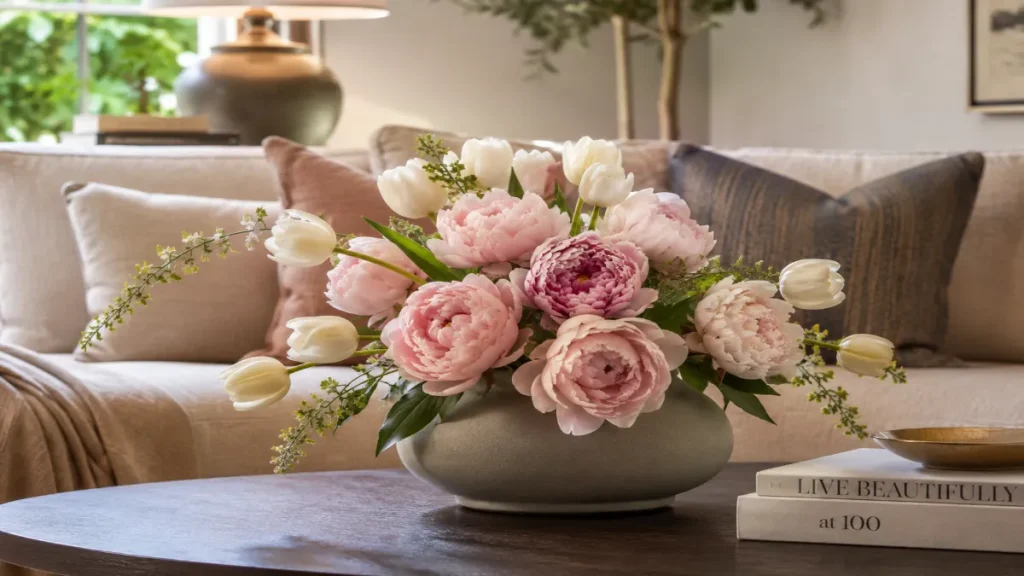
Opt for a low, wide glass bowl or ceramic dish. Fill it with tight, lush blooms like real-touch peonies, hydrangeas, or tulips. Keeping the arrangement low ensures it won’t block the view across the room.
One decorating trick that many homeowners overlook is visual proportion. If your coffee table already contains books, candles, or decorative trays, avoid oversized floral arrangements. The flowers should complement those elements rather than dominate them. A centerpiece occupying roughly one-third of the table often creates the most balanced appearance.
Another professional technique involves adding different stem heights inside the arrangement. Nature is never perfectly symmetrical, and neither should your bouquet be. Slight height variation instantly creates realism.
The Sofa Side Accent
Place a tall, statement floor vase made of ceramic or tinted glass right next to your couch. Fill it with long-stemmed faux branches, such as faux orchid stems, pampas grass, or cherry blossoms, to add vertical height and drama to the room.
Tall branches naturally guide the eye upward, making ceilings appear higher than they actually are. Interior stylists frequently rely on this illusion in apartments where ceiling height cannot be changed.
I’ve also found that matte ceramic containers consistently outperform glossy plastic vases. Even premium artificial flowers lose credibility when they’re paired with inexpensive-looking containers.
If you’re searching for additional arrangement inspiration, the ideas shared in Flower Design Home Decoration pair beautifully with modern living room layouts and can help expand your styling options even further.
Why Material Quality Changes Everything
The biggest mistake beginners make isn’t selecting the wrong flower variety. It’s purchasing stems made from shiny injection-molded plastic. Cheap plastic reflects light unnaturally. Human eyes instantly recognize this artificial shine, even without consciously realizing why the arrangement feels unrealistic.
Premium “Real Touch” flowers, on the other hand, use polyurethane coatings that imitate the softness and subtle texture of genuine petals. Silk flowers also diffuse light more naturally, creating softer shadows and realistic color transitions.
Professional decorators often mix several flower types together instead of purchasing one identical bouquet. Combining peonies, eucalyptus, ranunculus, and seasonal greenery introduces the irregularity that naturally exists outdoors.
- Choose matte finishes whenever possible.
- Look for wired stems that can be reshaped naturally.
- Avoid perfectly identical bloom sizes.
- Mix greenery with flowers instead of displaying blooms alone.
- Select containers made from ceramic, stone, wood, or textured glass.
Designer Insight: Why Less Often Looks More Expensive
Many homeowners believe that filling every empty corner with flowers automatically creates elegance. Surprisingly, the opposite is often true.
Luxury hotels, boutique resorts, and professionally designed homes typically use fewer arrangements but each one is carefully positioned to create maximum visual impact. Rather than decorating every table, identify focal points:
- The main coffee table.
- An entryway console.
- A dining centerpiece.
- A bedroom nightstand.
- A bookshelf requiring texture.
This selective approach allows each arrangement to stand out instead of blending into visual clutter.
Professional designers featured by Architectural Digest. frequently combine restrained floral styling with natural materials like wood, linen, and stone to create interiors that feel timeless rather than overly decorated.
2. Elevate Your Dining Room with an Elegant Centerpiece
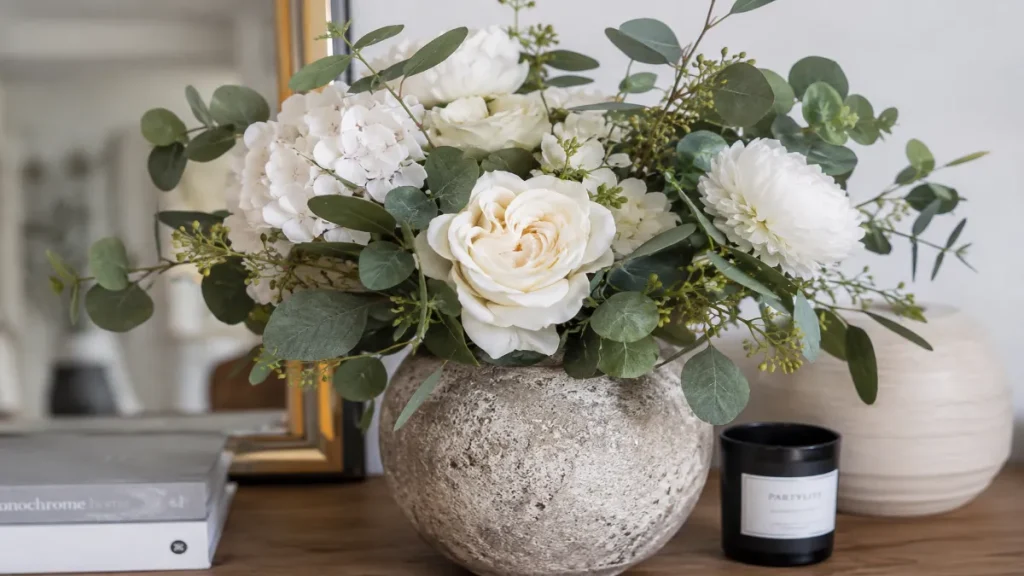
The dining table is where families gather, guests are entertained, and celebrations happen. A thoughtfully designed artificial flower arrangement becomes more than decoration it becomes a conversation piece that instantly makes the room feel warm and welcoming.
Unlike fresh flowers that may begin to wilt halfway through an event, high-quality faux blooms remain flawless throughout dinner parties, family gatherings, and holiday celebrations. That consistency is one of the biggest reasons professional interior designers frequently recommend artificial centerpieces for dining spaces.
Choose the Right Vase Shape
Your vase is just as important as the flowers themselves. The wrong container can make even premium artificial blooms look inexpensive.
- Round ceramic bowls create soft, modern arrangements.
- Clear glass cylinders work beautifully with tulips and lilies.
- Stone-textured vases complement rustic interiors.
- Matte black containers suit contemporary homes.
- Neutral beige pottery blends naturally with Scandinavian décor.
A useful design principle is to keep the centerpiece low enough that people sitting across the table can comfortably maintain eye contact. This creates a practical arrangement without sacrificing visual beauty.
Best Artificial Flowers for Dining Tables
Not every flower works equally well as a centerpiece. Large blooms create elegance, while greenery provides movement and softness.
| Flower Type | Style | Best Interior |
|---|---|---|
| Hydrangea | Full & Luxurious | Traditional Homes |
| Peony | Soft & Romantic | Modern Classic |
| Tulip | Minimalist | Scandinavian |
| Orchid | Luxury | Contemporary |
| Eucalyptus | Natural Greenery | Every Style |
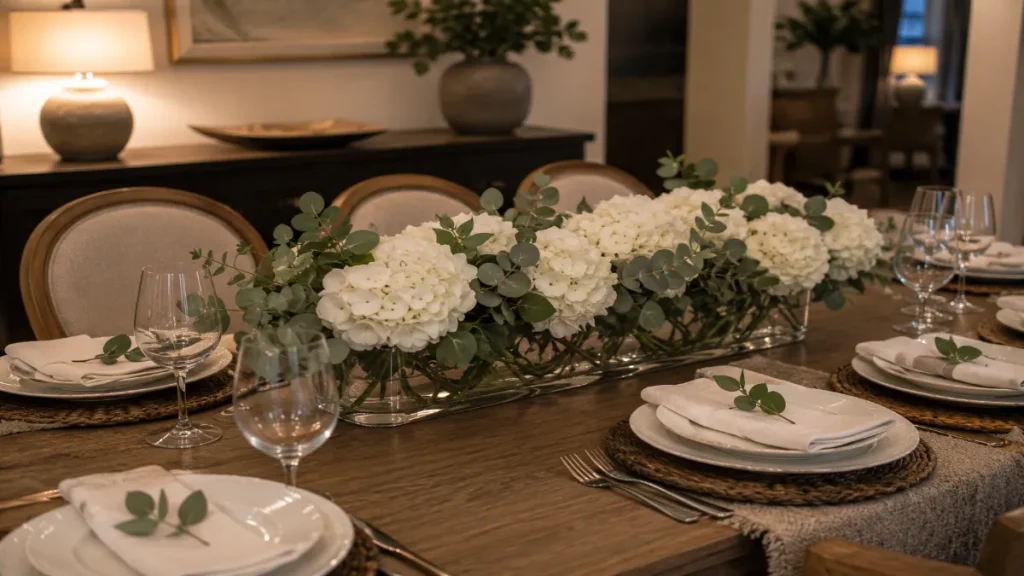
Combining flowers with realistic eucalyptus stems creates a softer transition between blooms and vase. Nature rarely produces bouquets made from only one flower variety, so mixing textures always looks more authentic.
3. Bring Calm to the Bedroom with Soft Floral Styling
The bedroom doesn’t need oversized arrangements. Instead, subtle floral accents create a relaxing atmosphere that encourages rest without overwhelming the space. Soft-colored artificial flowers such as white roses, blush peonies, cream hydrangeas, or lavender stems introduce gentle color while maintaining a peaceful environment.
Nightstand Decorations
A small ceramic vase beside the bed instantly makes the room feel finished. Keep arrangements compact and uncluttered.Many decorators recommend odd-numbered stems—three, five, or seven—because they appear naturally balanced to the eye.
Dresser Styling Ideas
If your dresser feels empty, combine artificial flowers with decorative accessories.
- A framed photograph
- A scented candle
- A small stack of books
- A decorative tray
- A ceramic flower arrangement
This layered approach adds texture without making the surface feel crowded. When styling bedroom furniture, negative space is just as valuable as decorative objects. Leaving breathing room between accessories helps every item receive attention.
Mix Artificial Flowers with Natural Elements
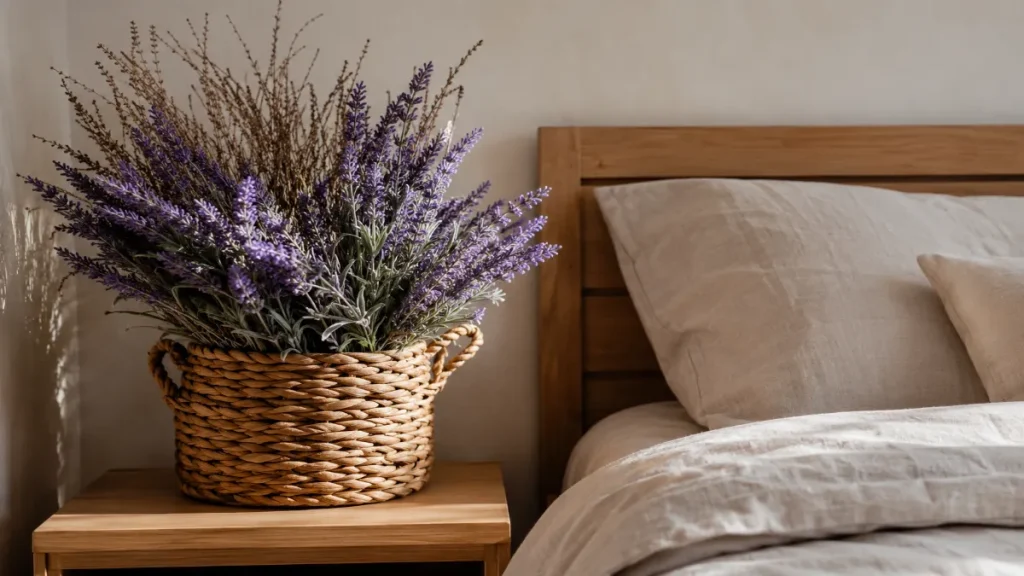
One trick frequently used by interior stylists is combining faux flowers with genuine natural materials. For example, placing artificial roses inside a handcrafted woven basket or pairing silk hydrangeas with real dried branches immediately creates a richer, more believable arrangement. Some excellent combinations include:
- Artificial lavender with real wicker baskets.
- Silk tulips inside stone pottery.
- Real driftwood beside faux orchids.
- Dried pampas grass mixed with artificial eucalyptus.
- Natural river stones surrounding decorative vases.
These combinations blur the line between real and artificial decoration while adding texture that photographs beautifully in natural daylight.
Lighting Makes Artificial Flowers Look More Real
Even premium faux flowers can appear artificial under harsh lighting. Conversely, moderate natural light often makes average-quality arrangements look surprisingly convincing.
Whenever possible, position arrangements where they receive indirect daylight from nearby windows. Soft morning or afternoon light highlights petal texture while avoiding excessive reflections.
Warm LED lamps also complement artificial flowers during the evening. Cold white lighting tends to flatten colors and reveal synthetic materials more easily.
Interior designers often test arrangements during both daytime and nighttime before deciding on their final location. A bouquet that looks perfect at noon may appear completely different after sunset.
4. Refresh Your Entryway with a Welcoming Floral Display
Your home’s entrance creates the very first impression for every visitor. Even if the rest of your house is beautifully designed, a plain entryway can make the interior feel unfinished. A carefully arranged display of artificial flowers immediately adds warmth, personality, and elegance before guests even step into the living room.
Artificial flowers are especially practical in entryways because these areas often experience changing temperatures and limited sunlight. Unlike fresh flowers, faux arrangements remain vibrant regardless of the season.
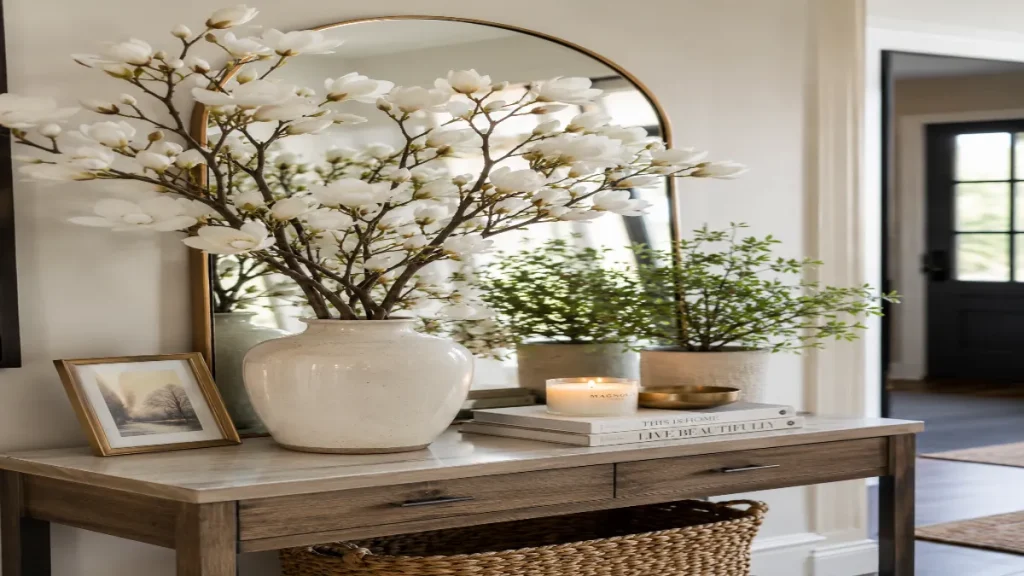
Console Table Styling Ideas
A narrow console table offers the perfect place for a medium-sized arrangement. Instead of placing flowers alone, create a layered composition using different decorative objects.
- Artificial flower arrangement
- Decorative mirror
- Small scented candle
- Ceramic bowl or tray
- Stack of decorative books
This layered styling technique creates visual balance while preventing the area from looking empty.
Create Height with Tall Branches
If your entrance has enough vertical space, consider using tall artificial branches instead of traditional bouquets. Cherry blossoms, magnolia branches, and faux olive stems naturally draw the eye upward, making smaller foyers appear much larger.
Interior designers frequently position tall arrangements beside mirrors because reflections create the illusion of doubled greenery without adding extra decorations.
5. Decorate Empty Corners with Floor Arrangements
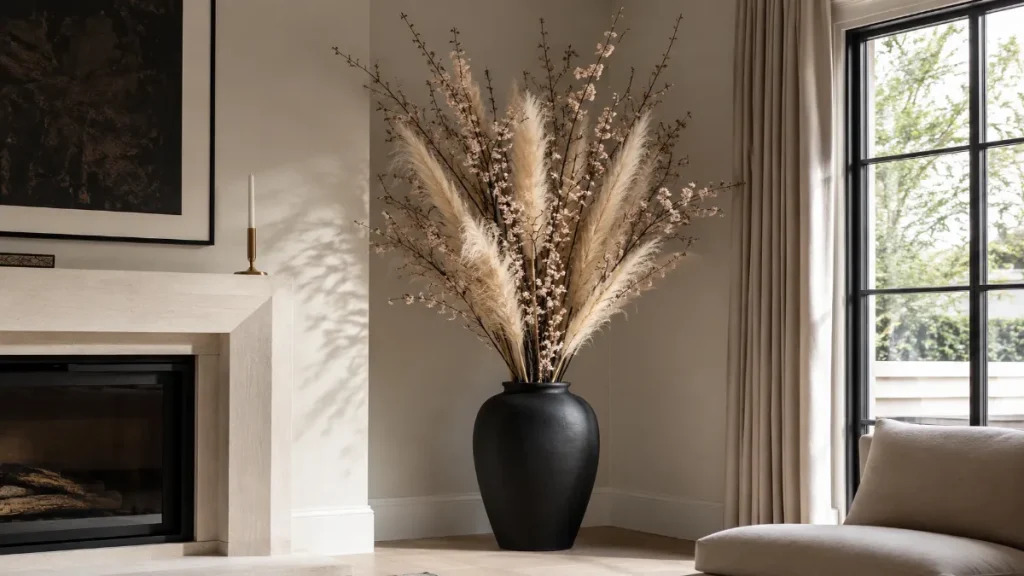
Almost every home has an awkward empty corner that feels unfinished. Rather than purchasing another piece of furniture, a large floor vase filled with premium artificial flowers can transform unused space into a beautiful focal point. Large arrangements work particularly well in living rooms, hallways, stair landings, and open-plan interiors where additional height helps balance wide spaces.
Best Flowers for Floor Vases
| Flower | Height | Best Placement |
|---|---|---|
| Cherry Blossom | Tall | Living Room Corner |
| Pampas Grass | Very Tall | Modern Interior |
| Magnolia Branches | Tall | Hallway |
| Orchid Stems | Medium | Bedroom Corner |
| Olive Branches | Tall | Minimalist Homes |
The vase itself should feel substantial. Lightweight plastic containers often tip over easily and reduce the luxurious appearance of the arrangement.
Common Decorating Mistakes to Avoid
Artificial flowers have become incredibly realistic, but poor styling choices can still reveal that they’re not natural. Fortunately, these mistakes are easy to avoid once you recognize them.
- Using too many identical flowers.
- Choosing bright plastic-looking leaves.
- Leaving stems perfectly straight.
- Selecting oversized arrangements for small tables.
- Ignoring seasonal color harmony.
- Using cheap lightweight plastic vases.
- Displaying dusty flowers without cleaning them.
A simple adjustment, such as gently bending stems into different directions, often makes an arrangement appear dramatically more authentic.
How to Clean Artificial Flowers Properly
Although artificial flowers require almost no maintenance, occasional cleaning keeps them looking fresh throughout the year.
Weekly Maintenance
- Dust flowers with a soft microfiber cloth.
- Use a feather duster for delicate petals.
- Remove visible debris from leaves.
Monthly Deep Cleaning
- Remove flowers from the vase.
- Blow away loose dust using cool air.
- Wipe stems with a damp microfiber cloth.
- Allow everything to dry naturally.
- Reshape petals before returning them to the vase.
Avoid soaking silk flowers in water unless the manufacturer specifically recommends it. Excess moisture can weaken adhesives or affect certain fabric finishes.
How to Make Artificial Flowers Look Expensive
Luxury styling isn’t determined by price alone. It’s created through careful attention to detail.
Professional decorators often trim stems to different lengths before arranging them. They also rotate flowers so no two blooms face exactly the same direction. These small adjustments imitate natural growth patterns and prevent arrangements from appearing factory-made.
- Mix flowers with greenery.
- Leave small gaps between blooms.
- Choose neutral-colored containers.
- Add varying stem heights.
- Avoid overcrowding arrangements.
- Use textured ceramic or stone vases.
Another overlooked technique involves rotating arrangements every few weeks. Even though artificial flowers don’t grow, changing their orientation refreshes the room and prevents decorative fatigue.
Seasonal Styling Ideas for Artificial Flowers
One of the greatest advantages of decorating with artificial flowers is flexibility. Unlike fresh flowers that are limited by seasonal availability, faux arrangements can be updated throughout the year without replacing every stem. A few small changes in color or greenery can completely transform the atmosphere of your home.
Professional decorators often keep a neutral base arrangement and simply swap accent flowers according to the season. This approach saves money while keeping interiors looking fresh year-round.
| Season | Recommended Flowers | Color Palette |
|---|---|---|
| Spring | Tulips, Cherry Blossoms, Daffodils | Soft Pink, White, Yellow |
| Summer | Sunflowers, Hydrangeas, Peonies | Bright Yellow, Blue, White |
| Autumn | Dried Leaves, Pampas Grass, Cotton | Brown, Rust, Cream |
| Winter | Pine Branches, White Roses, Berries | White, Green, Silver |
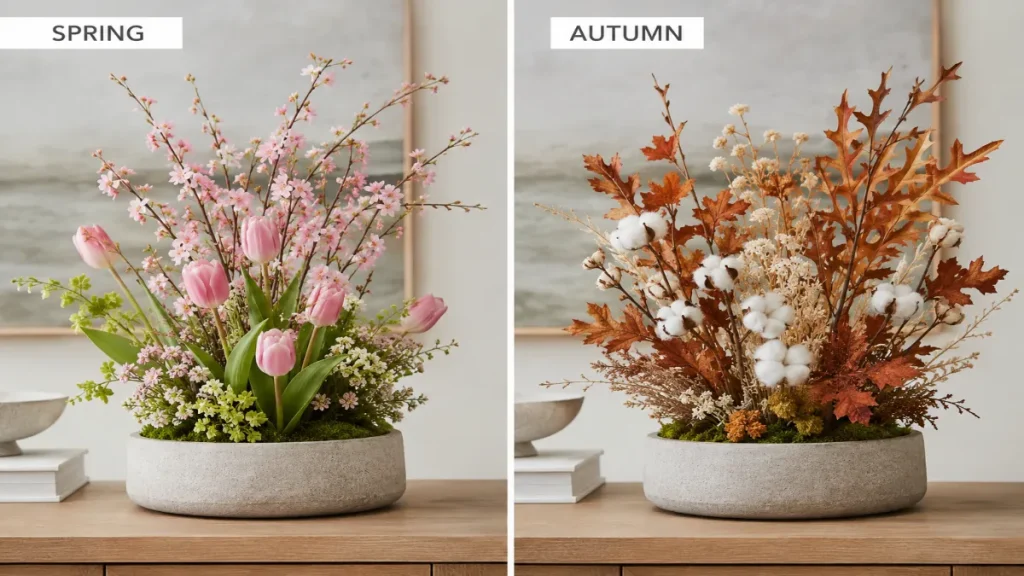
Changing only a few stems every season creates a completely different look without investing in entirely new arrangements.
Budget-Friendly Decorating Tips
Beautiful interiors don’t always require expensive floral collections. Many homeowners assume luxurious decoration demands a large budget, but careful planning often delivers better results than expensive shopping.
Instead of purchasing several small bouquets, invest in two or three premium arrangements for the rooms where people spend the most time.
- Start with one statement arrangement.
- Reuse decorative vases in different rooms.
- Mix affordable greenery with premium flowers.
- Purchase timeless neutral colors.
- Rotate arrangements seasonally.
This strategy creates a consistently elegant appearance while keeping decorating costs under control.
Artificial Flowers vs Fresh Flowers
| Feature | Artificial Flowers | Fresh Flowers |
|---|---|---|
| Maintenance | Very Low | High |
| Lifespan | Several Years | 5–10 Days |
| Water Required | No | Yes |
| Allergy Friendly | Yes | Not Always |
| Long-Term Cost | Lower | Higher |
| Seasonal Availability | Year-Round | Limited |
While fresh flowers provide a natural fragrance and organic beauty, artificial flowers excel in durability, affordability, and convenience. For busy households, offices, rental properties, or vacation homes, faux arrangements often provide better long-term value.
Frequently Asked Questions
Do artificial flowers look realistic?
Yes. High-quality Real Touch and silk flowers closely resemble fresh blooms in texture, shape, and color. Choosing premium materials and arranging them naturally makes a significant difference.
Which rooms are best for artificial flowers?
Living rooms, bedrooms, dining areas, entryways, kitchens, bathrooms, and home offices all benefit from carefully selected faux floral arrangements.
How often should artificial flowers be cleaned?
Light dusting every week and a deeper cleaning once each month will keep arrangements looking fresh and attractive throughout the year.
What type of vase works best?
Ceramic, stone, matte glass, and textured pottery generally provide the most premium appearance while complementing modern interior styles.
Can artificial flowers be used outdoors?
Only if they are specifically manufactured for outdoor use. Standard indoor faux flowers may fade or deteriorate when exposed to prolonged sunlight and rain.
How can I make artificial flowers look more natural?
Bend stems slightly, vary bloom heights, combine flowers with greenery, and avoid perfectly symmetrical arrangements. Nature is beautifully imperfect, and your décor should reflect that.
Final Thoughts
Home decoration with artificial flowers proves that elegance doesn’t have to come with constant maintenance. By selecting realistic blooms, pairing them with quality vases, and arranging them thoughtfully throughout your home, you can enjoy sophisticated interiors that remain beautiful every day of the year.
Whether you’re decorating a cozy apartment, a spacious family home, or a professional office, artificial flowers offer endless possibilities for adding warmth, texture, and timeless style. Focus on quality over quantity, embrace natural-looking compositions, and remember that the most memorable interiors are created through balance rather than excess.
References


