Luxury home decor ideas work best when they focus on three things at once: layered lighting, tactile materials, and restraint in color. A home feels expensive not because of how much was spent on it, but because every surface, texture, and object earns its place in the room. That’s the direct answer. The rest of this guide breaks down exactly how to get there, room by room, mistake by mistake, without needing an interior designer’s budget or an interior designer’s black book.
Most people assume luxury means gold trim, marble everywhere, and furniture that costs more than a used car. That’s the version of luxury sold in showrooms, not the version that actually shows up in homes people love living in. Real luxury decor is quieter. It’s a linen sofa that’s been broken in just right, a hallway lit so shadows fall softly instead of flatly, a kitchen island made from one continuous slab of stone instead of three seamed pieces. The difference is intention, not price tag.
The Problem: Why Most “Luxury” Decor Attempts Fall Flat
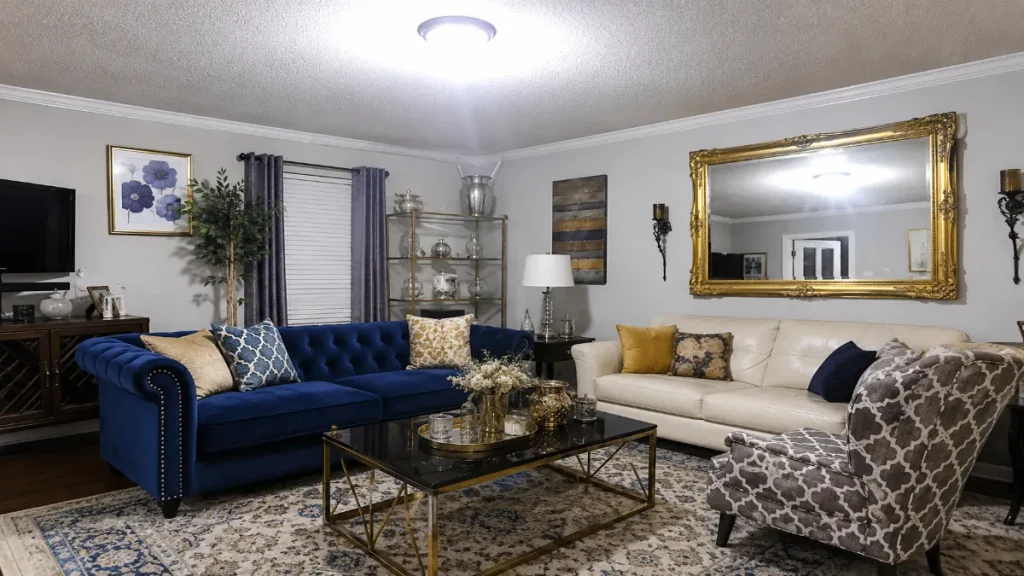
Here’s what usually goes wrong. Someone wants their living room to feel high-end, so they buy a tufted velvet sofa, a crystal chandelier, and a gold-framed mirror all in the same week, all from different stores, none of them related to each other in tone or scale. The result looks like a furniture showroom, not a home. It reads as expensive-adjacent rather than genuinely luxurious.
The core issue is that people chase individual “luxury objects” instead of building a cohesive material and lighting language across the whole space. A single marble table in a room full of laminate finishes doesn’t elevate the room it just highlights how mismatched everything else is.
Common Signs a Space Is Trying Too Hard
- Too many finishes competing brushed brass, chrome, and matte black all in one room
- Overhead lighting doing all the work with no lamps, sconces, or candles layered in
- Furniture bought as a “set” rather than curated piece by piece
- Pattern overload florals, stripes, and geometrics all fighting for attention
- Rooms that look staged for a photo but have nowhere comfortable to actually sit and read
The Solution: A Framework for Genuine Luxury Home Decor
Designers who work on high-end residential projects tend to follow an unspoken rule: pick one dominant material, one metal tone, and a tight color palette, then repeat them with small variations throughout the home. This creates what feels like an “expensive consistency” a home that flows instead of a home that’s decorated room by disconnected room.
1. Commit to a Material Story
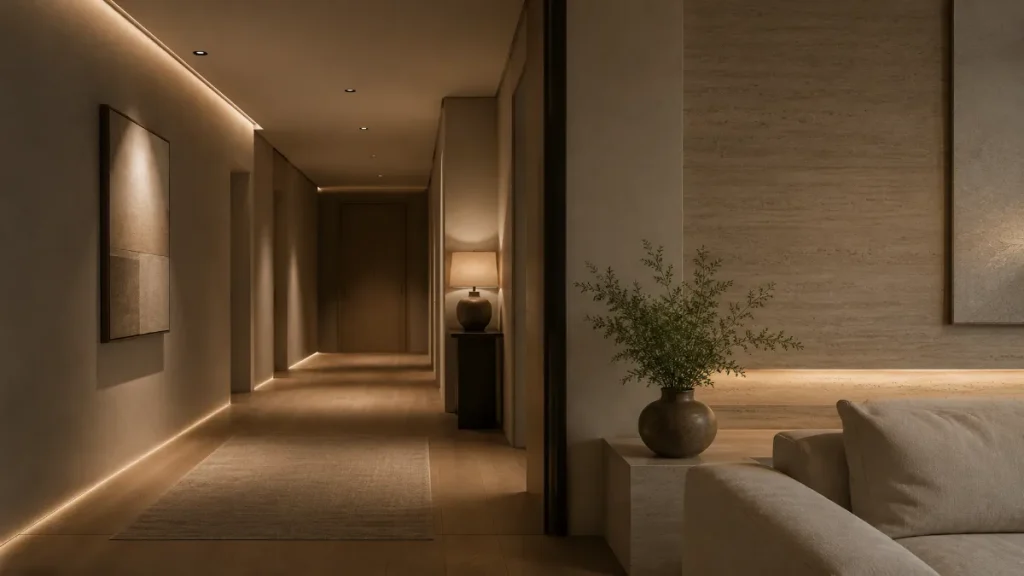
Choose two or three anchor materials say, honed limestone, white oak, and boucle fabric and let them show up again and again in different forms. The limestone might appear as a fireplace surround in the living room and as a bathroom vanity top upstairs. That repetition is what makes a home feel designed, not decorated.
2. Layer Light Like You’re Layering an Outfit
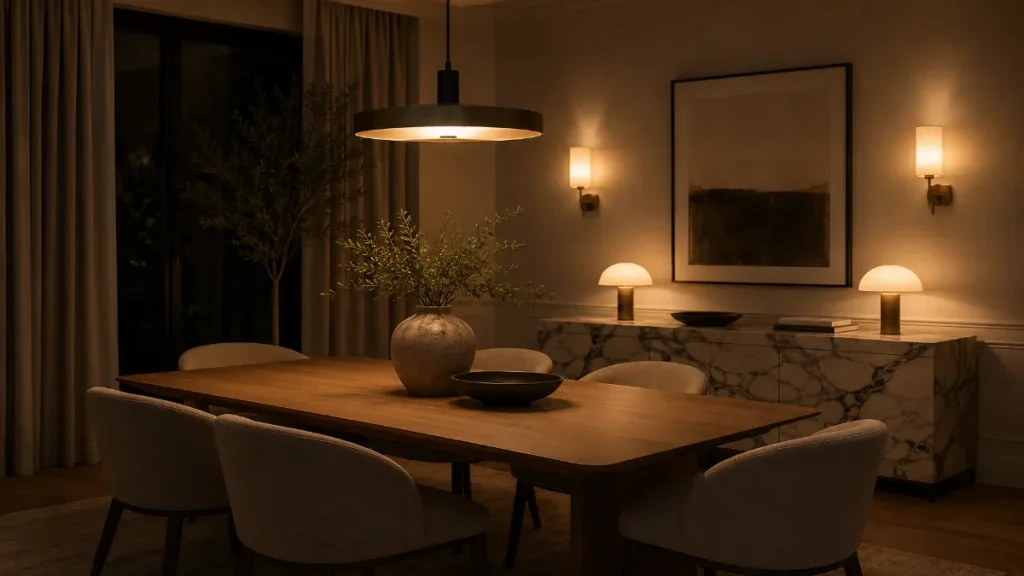
A single ceiling fixture flattens a room. Real luxury lighting design stacks at least three layers: ambient (recessed or ceiling), task (reading lamps, under-cabinet lighting), and accent (picture lights, wall sconces, candles). A dining room with a statement pendant and nothing else will always feel unfinished compared to one with the pendant, wall sconces on a dimmer, and a pair of table lamps on a sideboard.
3. Edit Ruthlessly
Luxury spaces have negative space. Every surface isn’t filled. A coffee table with one sculptural object and a stack of two books reads richer than one crowded with five decorative trays, candles, and trinkets. Editing is the most underrated luxury decor skill, and it costs nothing.
Room-by-Room Luxury Decor Ideas
Living Room
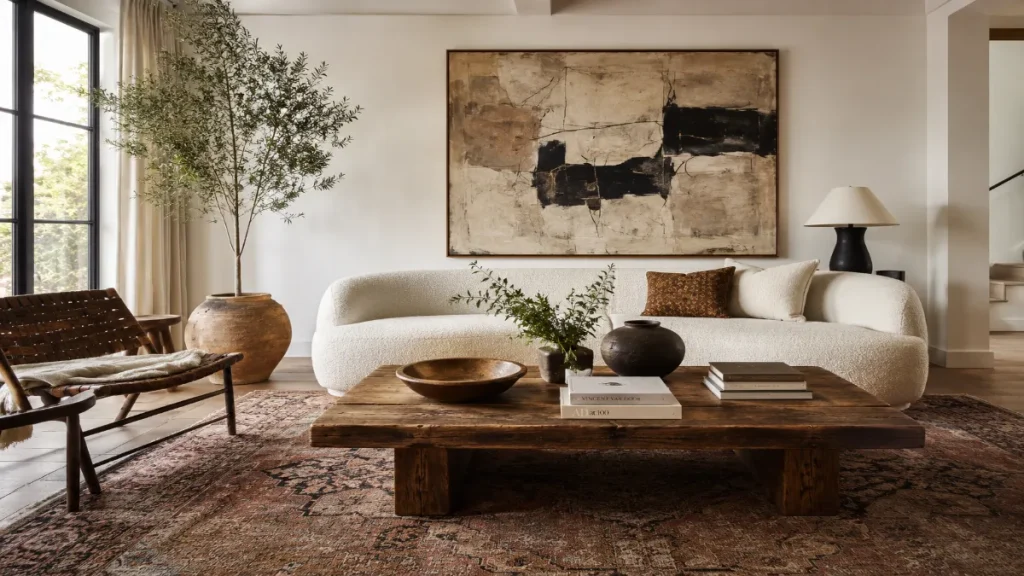
- Swap a glass coffee table for a solid stone or reclaimed wood one the weight changes the whole feel of the room
- Use a large-scale piece of art instead of several small ones; scale reads as confidence
- Choose a sofa in a natural fiber like linen, wool, or bouclé over synthetic velvet the texture ages beautifully instead of looking worn
- Add a vintage or antique rug even in an otherwise modern room; it breaks the “showroom” effect instantly
Kitchen
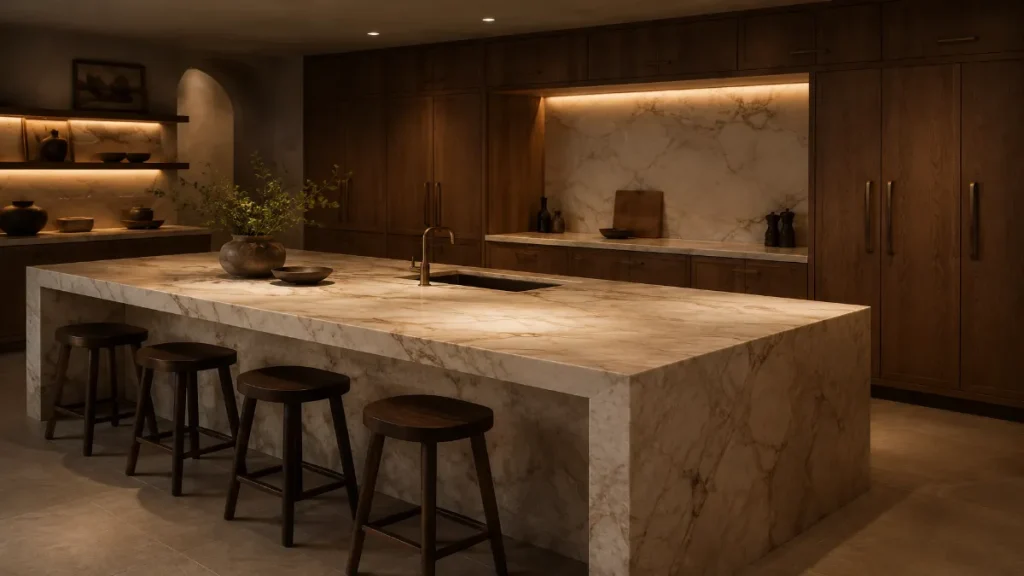
- Choose a single slab of stone for the island rather than seamed pieces the seamlessness alone signals quality
- Hide small appliances behind paneled cabinetry to keep counters visually calm
- Use unlacquered brass hardware that’s meant to patina over time it ages into the space rather than looking dated
- Install lighting on a dimmer above the island so the kitchen can shift from task-bright to dinner-party-soft
Bedroom
- Invest in high thread-count linens in a neutral tone rather than a busy patterned duvet set
- Add a bench or ottoman at the foot of the bed it’s a small furniture choice that hotels use constantly because it signals hospitality-level thought
- Use blackout drapery with a decorative sheer layered in front function and softness together
- Keep nightstand surfaces to three or fewer objects
Bathroom
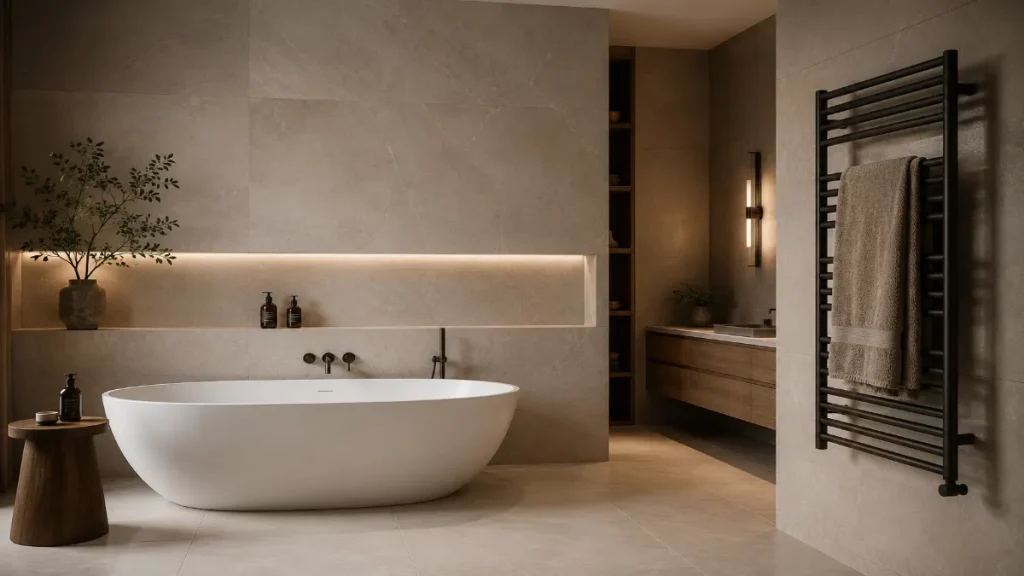
- Choose a freestanding tub if space allows; it reads as intentional in a way built-in tubs rarely do
- Use a single large-format tile instead of small mosaic tiles for a cleaner, more expansive look
- Add a heated towel rail a small mechanical luxury most people notice immediately but can’t quite name
Budget-Friendly vs High-Investment Luxury Upgrades
| Upgrade Type | Low Budget Option | High Investment Option | Impact Level |
|---|---|---|---|
| Lighting | Add dimmers and warm-bulb table lamps | Custom layered lighting plan with sconces and picture lights | Very High |
| Textiles | Linen throw pillows and a wool throw blanket | Custom drapery with blackout lining | High |
| Hardware | Swap cabinet knobs to unlacquered brass | Full cabinetry replacement with integrated hardware | Medium |
| Flooring | Vintage-style area rug | Wide-plank white oak flooring | Very High |
| Art & Objects | One large framed print instead of several small ones | Commissioned art or sculptural pieces | High |
Real-Life Example: The “One Room Rule”
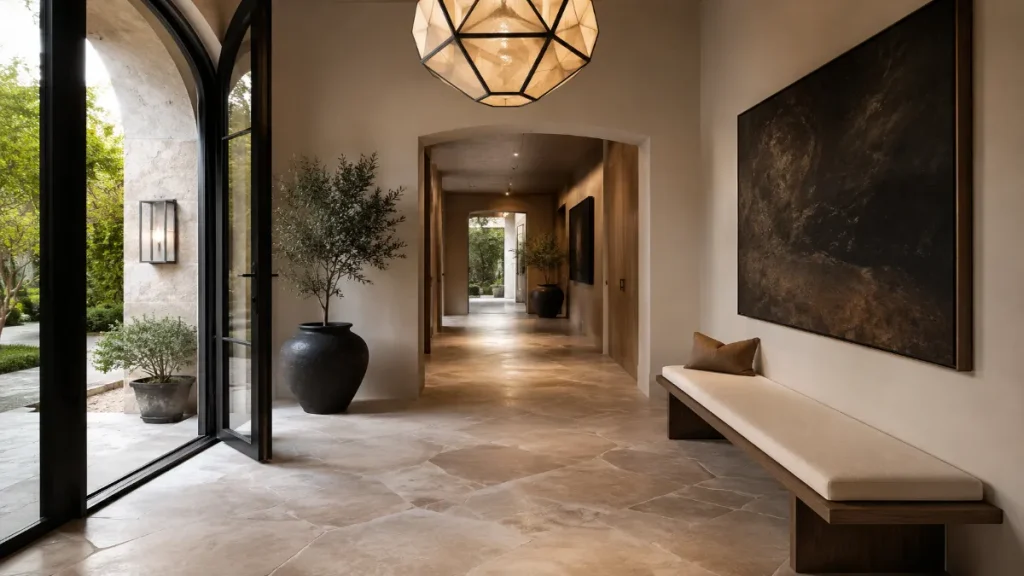
A homeowner I’ve seen this play out with had a modest budget but wanted the whole house to feel elevated. Instead of spreading the budget thin across every room, all the money went into one space the entryway. A stone floor, a single statement light fixture, and a bench with a wool cushion. Every guest’s first impression of the home became the most expensive-feeling part of it, and that impression carried through the rest of the visit psychologically, even though the bedrooms upstairs were furnished simply. This is a trick worth stealing: pick one room to overinvest in rather than diluting a budget evenly.
Common Mistakes to Avoid
- Buying matching furniture sets instead of curating pieces individually
- Relying only on overhead lighting
- Choosing trend-driven colors like a specific “it” shade of green or blue for large, permanent surfaces
- Over-accessorizing shelves and counters until nothing has visual breathing room
- Mixing too many metal finishes without a unifying logic
- Ignoring scent a home’s fragrance is part of how “luxury” registers, and most people skip it entirely
Expert Insight: What Actually Signals Luxury to the Eye
Interior designers often talk about “the hand” of a material how something feels when you touch it. A cheap laminate countertop and a honed quartzite countertop can look nearly identical in a photo, but the moment someone rests a hand on either surface, the difference is obvious. This is why luxury decor rewards touch as much as sight: raw silk versus polyester, brushed unlacquered brass versus chrome-plated zinc, solid wood versus veneer. If a budget is limited, spend it on the surfaces people are most likely to touch doorknobs, countertops, upholstery rather than on decorative objects that only get looked at.
Quick Checklist Before You Start Decorating
- Pick a 2-3 material palette and write it down before buying anything
- Plan lighting layers before choosing furniture placement
- Choose one room to overinvest in if the budget is limited
- Remove at least 20% of the decor objects currently in each room
- Test fabric and material samples in person before committing
Frequently Asked Questions
What makes a home look luxurious without spending a lot of money?
Layered lighting, a limited and consistent material palette, and editing down clutter make the biggest visible difference relative to cost. A room with dimmable lamps, one large piece of art, and negative space on surfaces often reads richer than a room full of expensive but mismatched pieces.
What colors are best for luxury home decor?
Warm neutrals cream, taupe, warm greige, soft charcoal tend to age well and pair naturally with natural materials like stone and wood. Deep, saturated tones such as emerald or ink blue work well as accent moments rather than dominant wall colors.
Is luxury home decor the same as minimalist decor?
Not exactly. Minimalism prioritizes reduction above all else, while luxury decor prioritizes quality and material honesty, which often results in fewer objects but isn’t defined by emptiness. A luxury room can be layered and warm as long as every piece in it earns its place.
What are the biggest mistakes people make with luxury decor?
Buying matching furniture sets, relying solely on overhead lighting, and over-accessorizing surfaces are the three most common mistakes. Each one flattens a room’s depth instead of adding to it.
How important is lighting in luxury interior design?
It’s one of the most important factors, arguably more important than furniture. Layered lighting — ambient, task, and accent changes how every material and color in a room reads, which is why the same furniture can look flat in one lighting setup and expensive in another.
Can rented apartments or small homes still achieve a luxury look?
Yes. Portable upgrades like plug-in dimmable lamps, high-quality textiles, unlacquered brass cabinet hardware (often removable), and a well-chosen area rug can transform a rented space without any permanent renovation.


