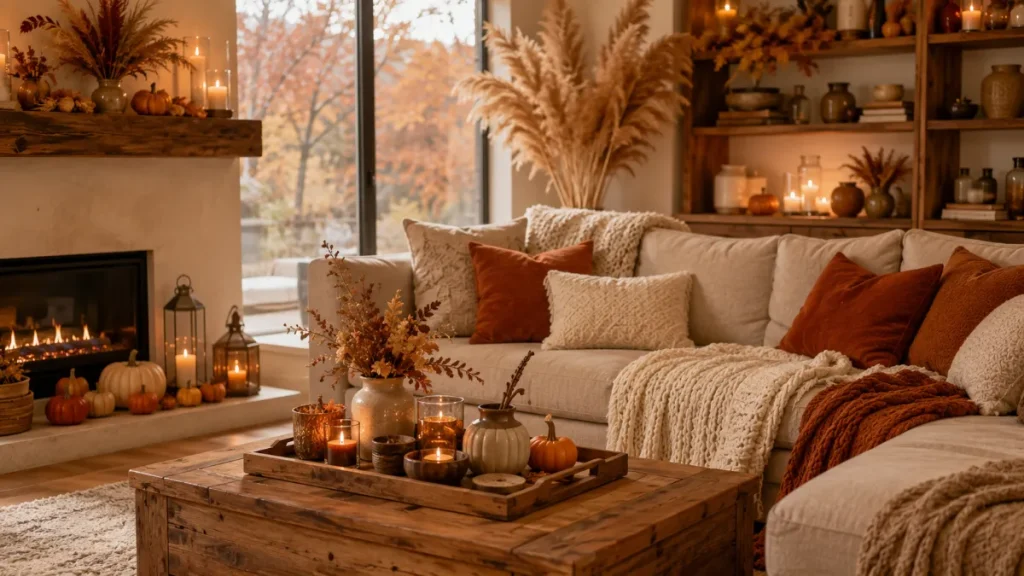
If you want autumn home decoration ideas that actually work in real living spaces, focus on three things: a warm, layered color palette, tactile natural materials, and lighting that shifts as the days get shorter. This guide walks through practical, budget-aware ways to bring that mix into every room, from the entryway to the dining table, with 2026-specific trends woven in throughout.
Fall styling isn’t just about swapping in a few pumpkins and calling it done. The homes that feel genuinely “autumnal” — rather than just decorated — combine texture, scent, and light in a way that changes how a room feels to sit in, not just how it looks in a photo. That’s the standard this guide is built around.
Key Takeaway: Effective autumn home decoration ideas rest on three pillars — warm color palette, layered natural textures, and ambient lighting — applied consistently across a home rather than concentrated in one "showcase" room.
What Are the Essential Elements of a 2026 Autumn Home Makeover?
The essential elements of a 2026 autumn home makeover are a warm earth-tone palette, layered textiles, natural materials, seasonal scent, and adjustable ambient lighting. Together these five elements create the sense of “arrival” that makes fall decor feel intentional rather than accidental.
In my practice, the most common mistake homeowners make is treating decor as a single layer — new pillows, done. Fall styling works best as stacked layers: a base tone on the walls or floor, a mid-layer of textiles and furniture accents, and a top layer of small, swappable objects like candles, gourds, or dried florals. This approach also makes it far easier to transition later into winter, since you can simply retire the top layer without redoing the whole room.
1. Warm Color Palette
A warm color palette is the foundation of almost every successful autumnal styling scheme. Think burnt orange, deep terracotta, mustard, chestnut brown, and muted olive, balanced against neutral interiors in oatmeal, cream, or warm gray so the space doesn’t feel visually heavy.
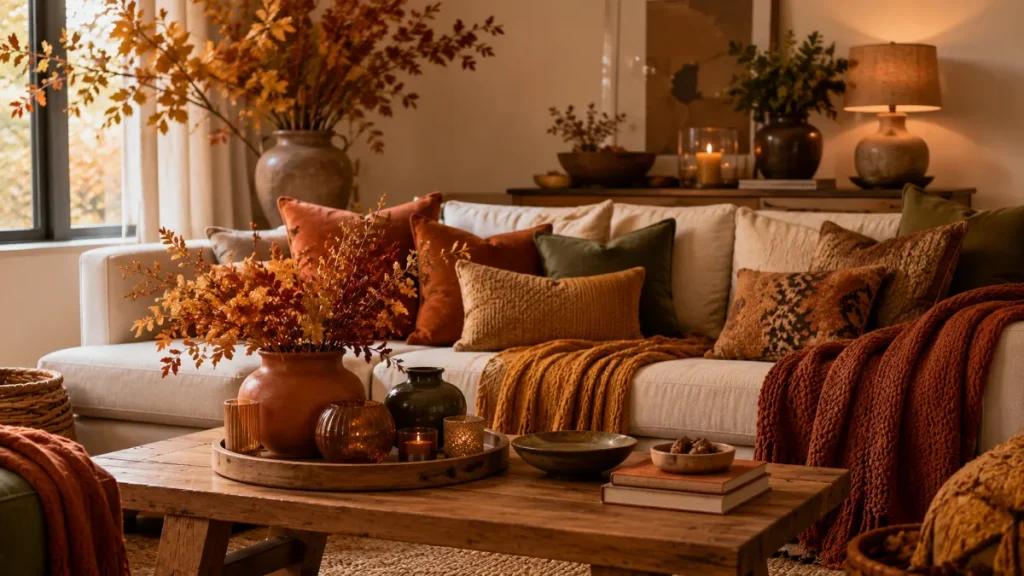
- Anchor with neutrals: Keep large surfaces (sofas, rugs, walls) in warm neutrals so bold seasonal colors read as accents, not overwhelm.
- Add color in soft goods: Throw pillows, table runners, and blankets are the cheapest way to introduce a warm palette without repainting anything.
- Use one “statement” hue per room: Pick a single deep tone — like chestnut or rust — as the dominant accent color rather than mixing four or five.
2. Layered Textures
Layered textiles — think chunky knit throws, boucle cushions, and woven jute rugs — do more to create a cozy fall look than any single decorative object. I’ve found that texture reads as warmth even in photos, which is part of why it’s become such a consistent theme in fall interior styling.
A simple layering formula that works in almost any living room: a woven jute or wool rug as the base, a knit throw folded over the sofa arm, and two to three textured cushions (boucle, corduroy, or linen) in your chosen accent color.
Key Takeaway: Start with a warm neutral base, add one dominant accent color, and build texture through rugs, throws, and cushions — this combination does most of the visual work in any autumn home decoration idea.
How Do You Choose an Autumn Color Palette for a Small Space?
For a small space, choose one or two warm accent colors and keep the rest of the room in warm neutrals, since too many saturated fall tones in a compact room can make it feel visually smaller and more cluttered.
Small apartments and rental homes benefit from what I’d call “concentrated” styling: instead of spreading fall color across every surface, pick a single focal point — a console table, a mantel, or a reading nook — and let that carry the full palette. The rest of the room stays neutral, which keeps sightlines open and the space feeling calm rather than crowded.
- One focal point: Style a single console table or shelf with your boldest colors and let it act as the room’s autumn “statement piece.”
- Light-reflective materials: Matte ceramics and natural wood tones (like a burnt-orange ceramic vase similar to pieces sold at West Elm) reflect light better than heavy, dark textiles in a small room.
- Vertical layering: Use wall hooks or a small shelf for a dried-flower wreath instead of floor-based decor that eats into walking space.
Renters in particular tend to ask how to do this without painting or permanent changes — the answer is almost always textiles, tabletop styling, and lighting, all of which are fully reversible at move-out.
Key Takeaway: In small spaces, concentrate your autumn color palette on one focal point and keep the rest of the room in warm neutrals to avoid visual clutter.
What Natural Elements Work Best for Autumn Styling in 2026?
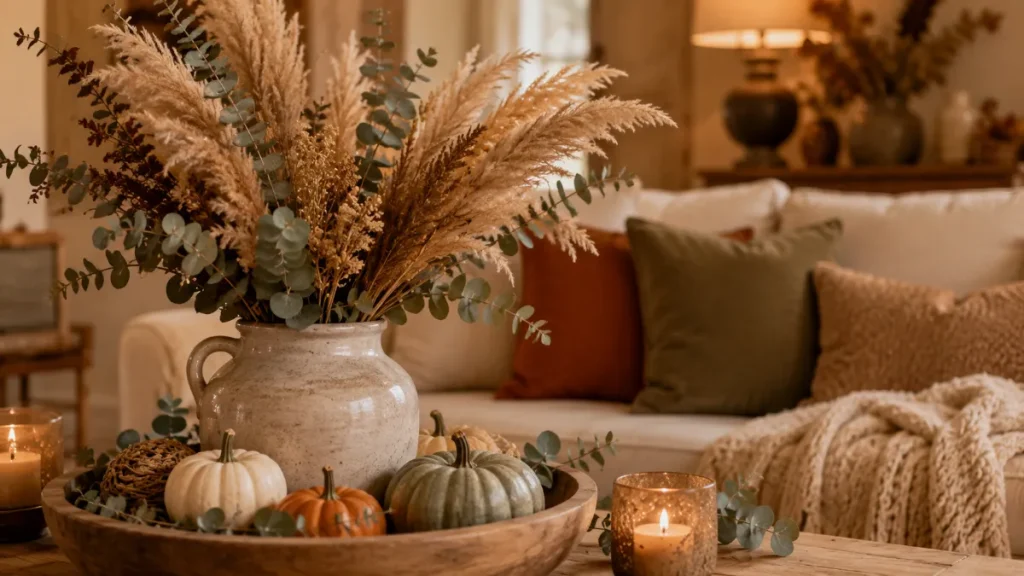
The natural elements that work best for autumn styling in 2026 are dried florals, pampas grass, seeded eucalyptus, small gourds and pumpkins, and unfinished wood — materials chosen for how they age gracefully rather than wilt within days. This is also where the biggest shift from previous years shows up.
In 2026, the move toward bio-materials in autumn decor has become one of the more noticeable trends in seasonal styling. Rather than plastic faux-pumpkins or synthetic garlands, homeowners are leaning into real dried botanicals, raw wood slices, and unglazed ceramics — partly for sustainability reasons, and partly because these materials simply weather better across a full season than mass-produced synthetic decor.
Durable Natural Decor Choices
- Dried pampas grass or bunny tails: Lasts an entire season (and beyond) in a tall floor vase, unlike fresh-cut branches that shed within a week.
- Real mini pumpkins and gourds: Choose ones with intact stems and no soft spots; they’ll typically hold up for six to eight weeks indoors away from direct heat.
- Unfinished wood slices or bowls: A rustic wooden bowl from a local artisan market makes a durable, reusable centerpiece base year after year.
- Dried eucalyptus or wheat stalks: Ideal for wreaths and garlands since they hold their color and shape without water.
A practical note from experience: avoid placing real gourds directly on wood furniture without a mat or tray, since moisture from the underside can leave marks over several weeks.
Key Takeaway: The 2026 shift toward bio-materials favors dried botanicals, real gourds, and unfinished wood over synthetic decor, both for sustainability and for how well these materials hold up across a full season.
How Can You Style Cozy Lighting for Fall Evenings?
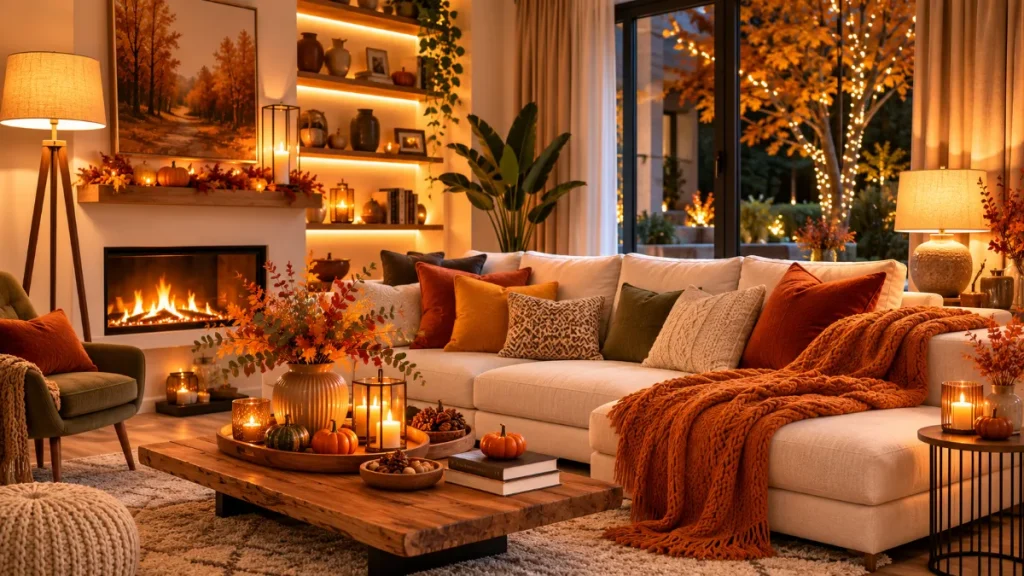
Cozy autumn lighting relies on layering light sources at different heights and warmth levels — floor lamps, table lamps, and candlelight — rather than depending on a single bright overhead fixture. As daylight hours shrink, this layering matters more in fall than in any other season.
Switch overhead bulbs to a warmer color temperature (around 2700K) if your fixtures allow it, then add at least two secondary light sources per room: a table lamp with a fabric shade, and either a cluster of candles or a small string-light installation. Fall scents matter here too — a fireplace-scented or cedarwood candle placed near a seating area does double duty as both ambient light and seasonal fragrance.
Fireplace Styling for Autumn
If you have a working or decorative fireplace, it naturally becomes the room’s focal point in fall. Style the mantel with a mix of heights: a low horizontal garland of dried foliage, two to three pillar candles of varying heights, and one taller statement piece like a dried branch arrangement or a framed piece of art leaned rather than hung.
For homes without a fireplace, a cluster of flameless candles inside a glass hurricane arrangement on a console table can recreate a similar warm focal point.
Key Takeaway: Layer lighting at multiple heights and warmth levels — lamps, candles, and warm-toned bulbs — rather than relying on overhead lighting alone, and use the fireplace or a candle cluster as your room's central focal point.
How Do You Create a Harvest Table Setting for Autumn Gatherings?
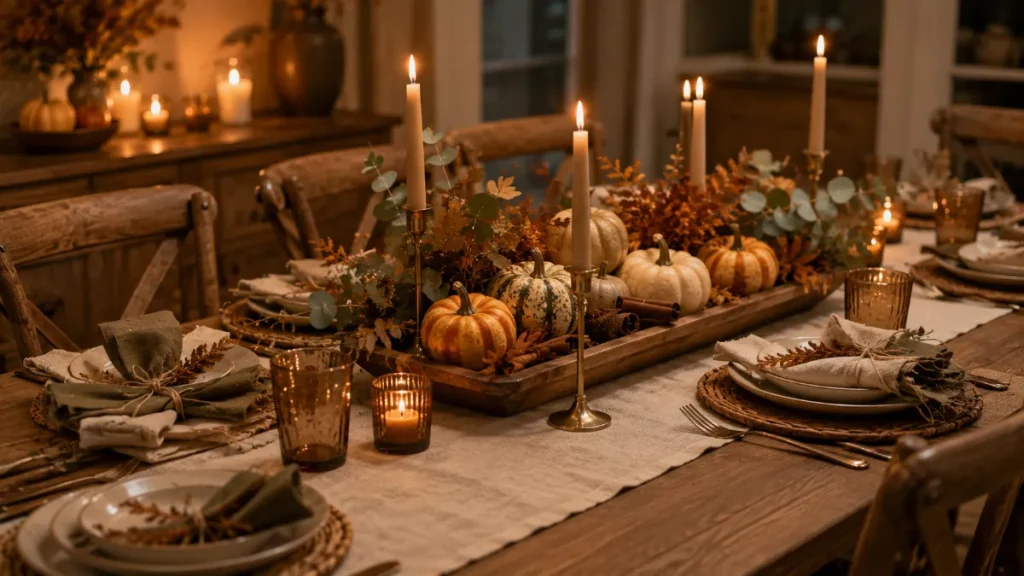
A harvest table setting is built around a runner in a warm neutral or rust tone, a low centerpiece that doesn’t block sightlines across the table, and mismatched natural textures like wood, linen, and ceramic. The goal is a table that feels gathered-together rather than overly matched.
As a decorator who has styled dozens of homes for the autumn season, I’ve seen that the most common styling mistake is a centerpiece that’s too tall or too dense, which forces guests to talk around it instead of across it. Keep any centerpiece under 12 inches tall if it’s placed in the direct line of sight between seated guests.
A Simple DIY Autumn Centerpiece
- Start with a low wooden tray or a rustic wooden bowl as the base.
- Add three to five small gourds or mini pumpkins in varying sizes.
- Tuck in a few sprigs of dried eucalyptus or wheat stalks for height without bulk.
- Scatter a handful of cinnamon sticks or dried orange slices around the base for texture and a subtle scent.
- Finish with two or three taper candles in mismatched heights, kept slightly off-center rather than perfectly symmetrical.
This setup costs relatively little compared to store-bought centerpieces, since most of the materials — wood trays, cinnamon sticks, dried citrus — can be reused or sourced from a kitchen pantry.
Key Takeaway: A successful harvest table setting stays under 12 inches tall at eye level, mixes natural materials rather than matching them exactly, and can be assembled affordably with pantry staples and a few seasonal accents.
Are Autumn Wreaths Still Worth the Investment in 2026?
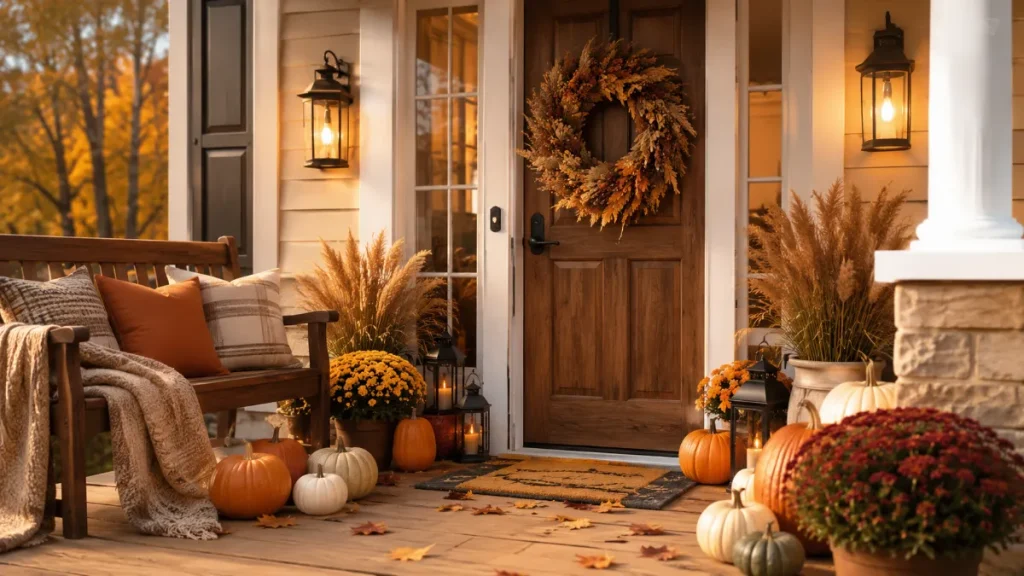
Yes — autumn wreaths remain one of the highest-impact, lowest-cost autumn home decoration ideas, since a single wreath on a front door or above a mantel signals “seasonal” instantly to anyone entering the home, at a fraction of the cost of redecorating a full room.
The 2026 fall preview from Architectural Digest highlights a continued move away from overly dense, artificial-looking wreaths toward looser, more asymmetrical arrangements using dried grasses, magnolia leaves, and a restrained color palette of two to three tones rather than five or six.
- Front door wreaths: Choose weather-resistant dried materials if your entry gets direct sun or rain exposure.
- Indoor wreaths: Can use more delicate dried florals since they’re protected from weather, making them a good place to splurge slightly.
- Sizing: A wreath should generally cover roughly one-third to one-half the width of the door or wall space it’s centered on.
Key Takeaway: A well-chosen autumn wreath remains one of the most cost-effective seasonal styling investments, especially when kept to a restrained two-to-three-tone palette rather than an overly busy arrangement.
What Is the Real Cost of Autumn Decorating, Room by Room?
The real cost of autumn decorating varies significantly by room and by whether you buy new pieces or restyle what you already own — a useful way to plan a budget is to compare the approximate cost-per-square-foot impact across common rooms rather than pricing decor item by item.
| Room | Budget-Friendly Approach | Higher-Investment Approach |
|---|---|---|
| Entryway | DIY wreath + seasonal doormat | Statement wreath + console table styling |
| Living Room | New throw pillows + one candle cluster | New throw + rug layering + lamp swap |
| Dining Room | DIY centerpiece + table runner | New runner set + matching place settings |
| Bedroom | Warm-toned bedding swap | Full bedding set + accent lighting |
A practical rule I use with clients: allocate roughly 60% of an autumn decor budget to the living room and entryway, since these are the spaces guests and family notice first, and the remaining 40% across bedrooms and dining areas.
Key Takeaway: Budget-conscious autumn decorating can be highly effective when spending is concentrated on the entryway and living room first, using restyled existing pieces before investing in new purchases elsewhere.
How Do You Transition Smoothly from Fall to Winter Decor?
You transition smoothly from fall to winter decor by removing harvest-specific items first — pumpkins, gourds, corn husks — while keeping the warm color palette, textured layers, and lighting scheme in place, since those elements work equally well through the winter months.
This is where the “layered” approach to styling really pays off. If your base layer (rug, neutral furniture) and mid-layer (textiles, lighting) were done well for autumn, the only real work in late November or early December is swapping the top layer — pumpkins out, evergreen sprigs or pinecones in — rather than redecorating from scratch.
For a deeper walk-through of preparing your whole home for the colder months ahead, see our [link: Internal guide on winterizing your home].
Key Takeaway: A smooth fall-to-winter transition only requires swapping the top decorative layer — harvest items for winter-appropriate ones — while keeping your color palette, textiles, and lighting scheme unchanged.
For further inspiration and seasonal collections, retailers like Pottery Barn’s seasonal decor guide offer useful reference points for current fall styling trends.
Frequently Asked Questions About Autumn Home Decoration Ideas
How do I decorate my home for autumn on a budget?
Focus on textiles you already own — swap in warm-toned pillow covers, add a throw blanket, and build a DIY centerpiece from pantry items like cinnamon sticks and dried orange slices. A single wreath and one candle cluster can transform an entryway and living room for under the cost of one new furniture piece.
What are the most popular fall color trends for 2026?
Deep terracotta, mustard, chestnut brown, and muted olive continue to lead, paired against warm neutral interiors in oatmeal and cream. The 2026 trend leans toward two or three dominant tones per room rather than a wide, busy palette.
How do I make a DIY autumn centerpiece?
Start with a low wooden tray or bowl, add three to five small gourds of varying sizes, tuck in dried eucalyptus or wheat stalks for height, scatter cinnamon sticks or dried citrus around the base, and finish with a few off-center taper candles under 12 inches tall.
What scents are considered classic fall scents for candles?
Cedarwood, cinnamon, clove, fireplace or “wood smoke,” and spiced apple remain the most commonly used fall scent categories, often layered — a base fireplace scent in the living room with a lighter spiced-citrus scent in the kitchen.
How many pumpkins should I use in a tabletop display?
Odd numbers generally read as more natural than even ones — three to five mini pumpkins of varying size in one cluster tends to look more intentional than a single large pumpkin or a perfectly matched pair.
Do real or faux pumpkins last longer for autumn decor?
Real mini pumpkins with intact stems typically hold up for six to eight weeks indoors away from direct heat, which covers most of the autumn season. Faux pumpkins last indefinitely but are increasingly being replaced by real or dried natural materials as part of the broader 2026 shift toward bio-materials.
How do I decorate a small apartment for fall without it feeling cluttered?
Concentrate your boldest colors and textures on a single focal point — one console table or shelf — and keep the rest of the space in warm neutrals. This keeps the room feeling open while still delivering a clear seasonal statement.
When should I take down autumn decor and switch to winter decor?
Most homeowners transition in late November, removing harvest-specific items like corn husks and gourds while keeping the underlying color palette, textiles, and lighting scheme in place for w
Key Takeaway: Most FAQ-level questions about autumn decorating come back to the same core principles budget-conscious layering, restrained color palettes, and materials chosen to last the full season.


